
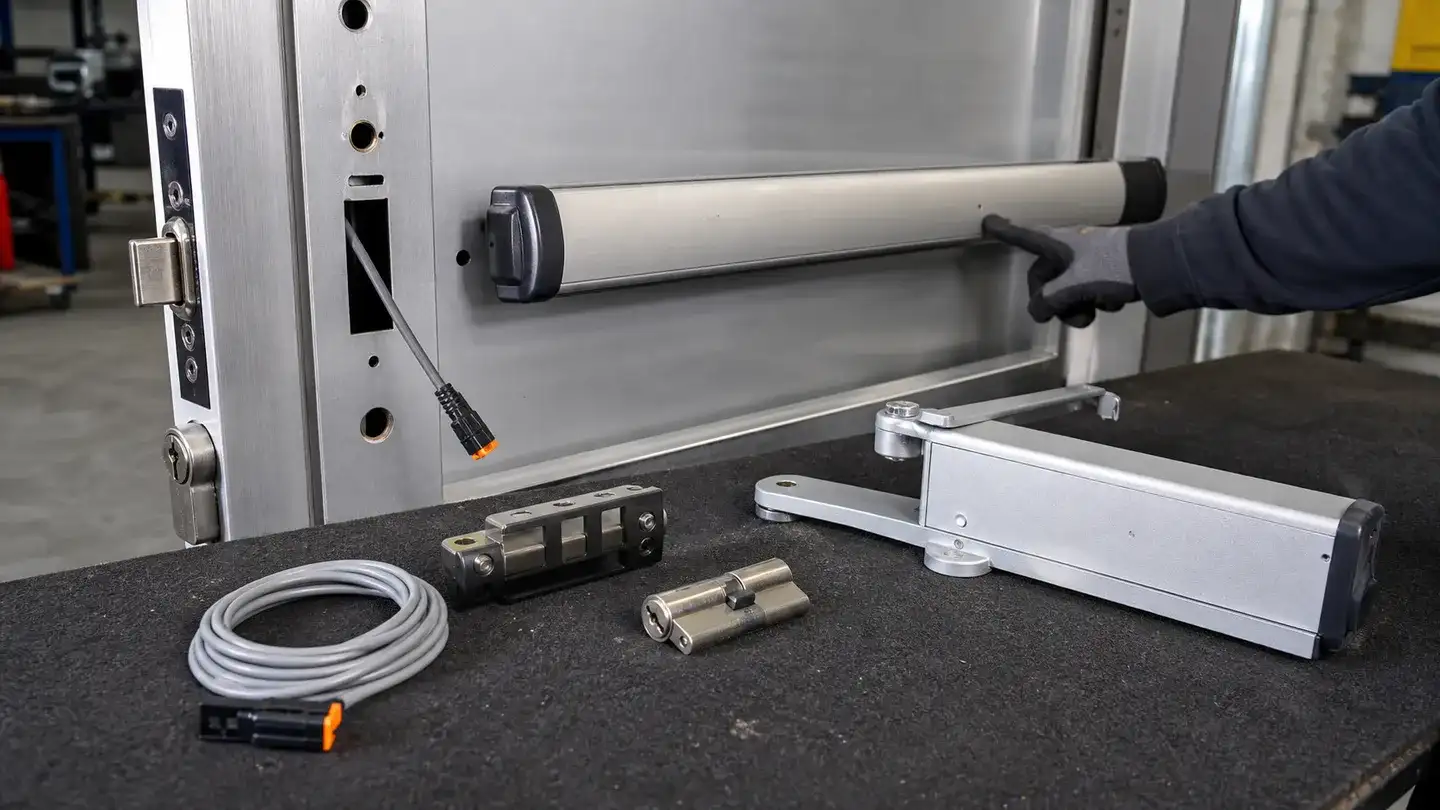
Panic Hardware and Access Control Replacement Handover Checklist
A trade checklist for surveying commercial aluminium doors with panic hardware, electric locking and access control before ordering a replacement leaf or doorset.
By Stephen Chappell. Published . Updated .
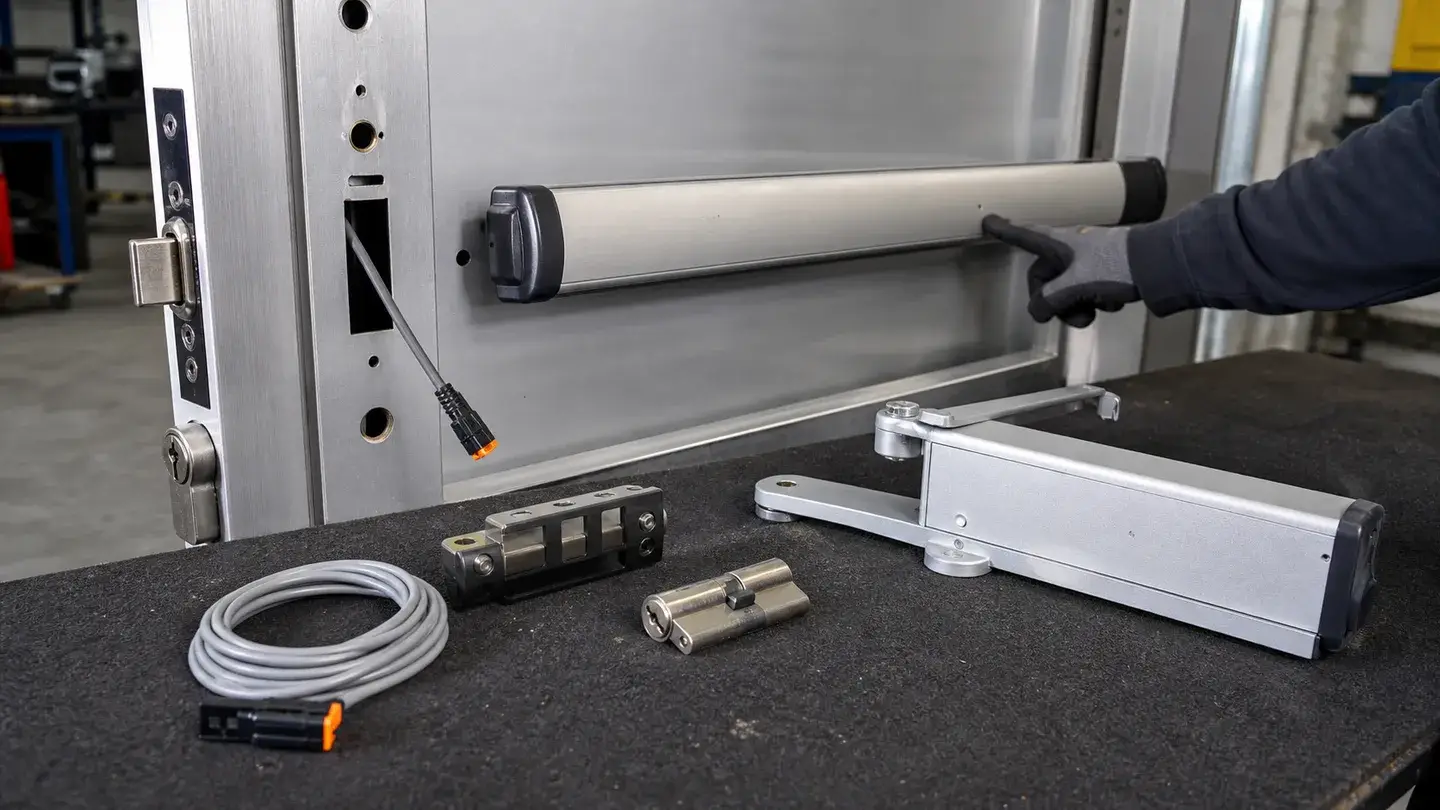
Panic hardware and access control turn a simple replacement door into a coordination job. The aluminium leaf can be fabricated perfectly and still fail on site if the panic bar, electric strike, maglock, reader, closer or cable route has been assumed rather than surveyed.
This checklist is for door engineers, maintenance contractors, shopfitters and facilities teams ordering a replacement aluminium leaf or doorset. It focuses on what to hand over to the fabricator before the door is cut.
It is not a substitute for the fire strategy, access-control designer, door automation specialist, hardware manufacturer’s instructions or a competent person’s sign-off. Its job is narrower: stop the replacement aluminium order from being wrong.
Start with the door’s job
Do not start with “copy what is there”. Start with what the door needs to do.
Record:
- Is the door on an escape route?
- Is it a public exit used by people unfamiliar with the building?
- Is it a staff-only escape door?
- Is the door normally locked, monitored or controlled?
- Is it single leaf, double leaf, rebated pair or sliding?
- Does the door need free egress at all times?
- Does the client need audit, hold-open, lockdown or delayed egress functions?
Approved Document B gives the building-regulations context for escape, but the live building may also have a fire-risk assessment, landlord standard or client access-control policy. The replacement should respect those documents rather than quietly copying a historic compromise.
Identify the hardware group
Split the survey into four groups. This keeps the handover clear.
1. Mechanical escape hardware
Photograph and measure:
- Panic bar, push pad or lever handle.
- Device length and fixing line.
- Vertical rods, top latch and bottom latch if present.
- Shoot bolts or flush bolts on inactive leaves.
- Outside access device, if fitted.
- Keep positions in the frame or threshold.
- Any signs of hardware fouling the frame, glass bead or finger guard.
Use the standards named in the client’s specification where they exist. In general terms, panic hardware and emergency escape hardware are not interchangeable choices. The type depends on who uses the exit and how the route is controlled.
2. Locking and cylinders
Record:
- Lock case type and manufacturer if visible.
- Backset, spindle height and cylinder position.
- Single, double or thumbturn cylinder.
- Hook, deadbolt, latch, multipoint or motorised lock.
- Strike or keep shape.
- Any existing key suite, restricted cylinder or master key requirement.
If the client wants to reuse cylinders, confirm the cylinder length and security requirement. A replacement profile may change cylinder projection, escutcheon depth or thumbturn clearance.
3. Closers, pivots and hinges
Record:
- Floor spring make/model if visible.
- Top pivot, bottom pivot and patch details.
- Transom closer or surface closer type.
- Door weight and leaf size if known.
- Hold-open requirement.
- Opening angle and any stop detail.
For heavy glazed aluminium leaves, closer choice is not cosmetic. Leaf weight, traffic level and wind exposure decide whether the door will close reliably without slamming.
4. Powered locking and access control
Record:
- Maglock, electric strike, motor lock or shear lock.
- Fail-safe or fail-secure requirement.
- Cable entry route into the leaf or frame.
- Power transfer hinge, loop, concealed transfer or frame conduit.
- Reader, keypad or fob reader position.
- Request-to-exit button, green break-glass unit and emergency override.
- Door contact and monitoring points.
- Interface with fire alarm, automatic operator or building-management system.
The fabricator can machine the aluminium and provide routes or preps. The access-control engineer should confirm the operating logic and commission the finished door.
The photos that prevent a wrong prep
Send wide photos and close-ups. A close-up alone loses the context; a wide shot alone loses the detail.
Minimum photo set:
- Full door elevation from pull side and push side.
- Head, threshold and both jambs.
- Panic or escape hardware from the operating side.
- Lock stile with tape across the profile.
- Keep and strike detail in the frame.
- Closer, pivot or floor-spring cover.
- Cable route, reader, request-to-exit and green break-glass unit.
- Any damaged area or evidence of previous modification.
If the building is live, include a photo that shows how the door is being controlled during the make-safe. This helps the office understand urgency without relying on a phone note.
The measurements to send
For the aluminium:
- Structural opening width at top, middle and bottom.
- Structural opening height at left, middle and right.
- Existing frame sightlines.
- Leaf width and height if leaf-only is being quoted.
- Stile width, rail depth and leaf thickness.
- Threshold height and floor levels both sides.
For the hardware:
- Lock centre from finished floor.
- Spindle centre from finished floor.
- Cylinder centre from finished floor.
- Backset from lock face.
- Panic device fixing height and end clearance.
- Keep positions from threshold or frame datum.
- Closer arm fixing centres where a surface closer is being reused.
Where manufacturer templates exist, send them. A photo of hardware and a tape measure is good. The manufacturer’s template is better.
Common replacement mistakes
These are the errors that create return visits.
Reusing old hardware without checking the door use
An old door may have had the wrong hardware for years. A replacement is the moment to correct that, not replicate it.
Moving powered locking without telling the access-control engineer
Even a small change to strike position, cable path or reader location can affect commissioning.
Forgetting the inactive leaf
On double doors, the inactive leaf often carries flush bolts, strikes, rods, keeps or rebated meeting details. Survey it as carefully as the traffic leaf.
Treating the threshold as just aluminium
The threshold may include keeps, bottom rods, seals, drainage and access implications. Approved Document M is relevant where the entrance is on an accessible route.
Ordering the leaf before the hardware is fixed
If hardware changes after fabrication, the leaf may need remachining or replacement. Fix the hardware brief first, then cut.
What to ask the end client
The engineer on site should ask simple questions before leaving:
- Does this door form part of an escape route?
- Has the access-control system changed since the door was installed?
- Are there recurring faults with locking or closing?
- Does the building need out-of-hours locking while the replacement is made?
- Are there tenants, landlord rules or insurer requirements to observe?
- Is the required outcome repair, like-for-like replacement, or an upgrade?
These questions often reveal why the old door failed. They also stop the maintenance company from pricing the wrong scope.
Fabricator handover format
A useful handover is short and complete:
- Opening reference and location.
- Required outcome: leaf-only, full doorset, or quote both.
- Door use: escape route, staff door, public entrance, controlled access.
- Photos and measurements.
- Hardware schedule or “reuse existing” note with proof.
- Access-control responsibility and engineer contact.
- Finish, glass and required-by date.
- Any unresolved risk or assumption.
That is enough for a supply-only fabricator to draw, quote and flag missing information. It is also enough for the maintenance desk to explain the quote back to the client.
Where Kingsland fits
We fabricate the aluminium leaf, frame or doorset supply-only. We can machine for panic hardware, locks, keeps, pivots, closers and access-control routes where the hardware information is provided. We do not commission access control, certify escape hardware or install on site.
For the wider door spec, see the commercial door hardware and security guide. For survey basics, use the make-safe to replacement triage checklist and the replacement survey checklist.
If a replacement needs panic hardware or powered locking, send the photos, hardware notes and required-by date through the trade quotation form. We will confirm what we can fabricate and what needs the access-control engineer before cutting.