
How Aluminium Shopfronts and Commercial Aluminium Doors Are Fabricated
An aluminium shopfront is fabricated by cutting extruded profiles (such as Jack Aluminium JD47) to a cutting list on a double-mitre saw, machining preps for locks, hinges, pivots and transoms, joining the corners with mechanical cleats or crimps — never welding — and squaring the assembled frame on a jig before beads, gaskets and hardware go on. The frame itself is a job measured in workshop hours; the calendar lead time is mostly engineering, powder coating and glass. This guide walks through every stage as we run it in our Warrington workshop — and covers when it makes more sense to buy the frame fabricated to your sizes.
By Stephen Chappell, Managing Director, Kingsland Fabrications. Updated 3 July 2026. Supply only for trade and commercial customers; we don't install.
The short answer: the eight stages of shopfront fabrication
Fabricating an aluminium shopfront means turning extruded bar-length profile into a finished, square, hardware-ready frame: survey sizes are engineered into a cutting list, each profile is cut and machined, the corners are mechanically joined, and the whole assembly is squared on a jig before gaskets, beads and hardware complete the fabricated order. Eight stages, in the order they happen on our workshop floor:
Survey sizes
Brick-to-brick structural opening sizes measured at three points, plus hardware spec, RAL colour, threshold detail and door positions.
Engineering and CAD approval
The survey is engineered in LogiKal into an elevation drawing and cutting list. CAD drawings are issued with the quote for sign-off before anything is cut.
Cutting
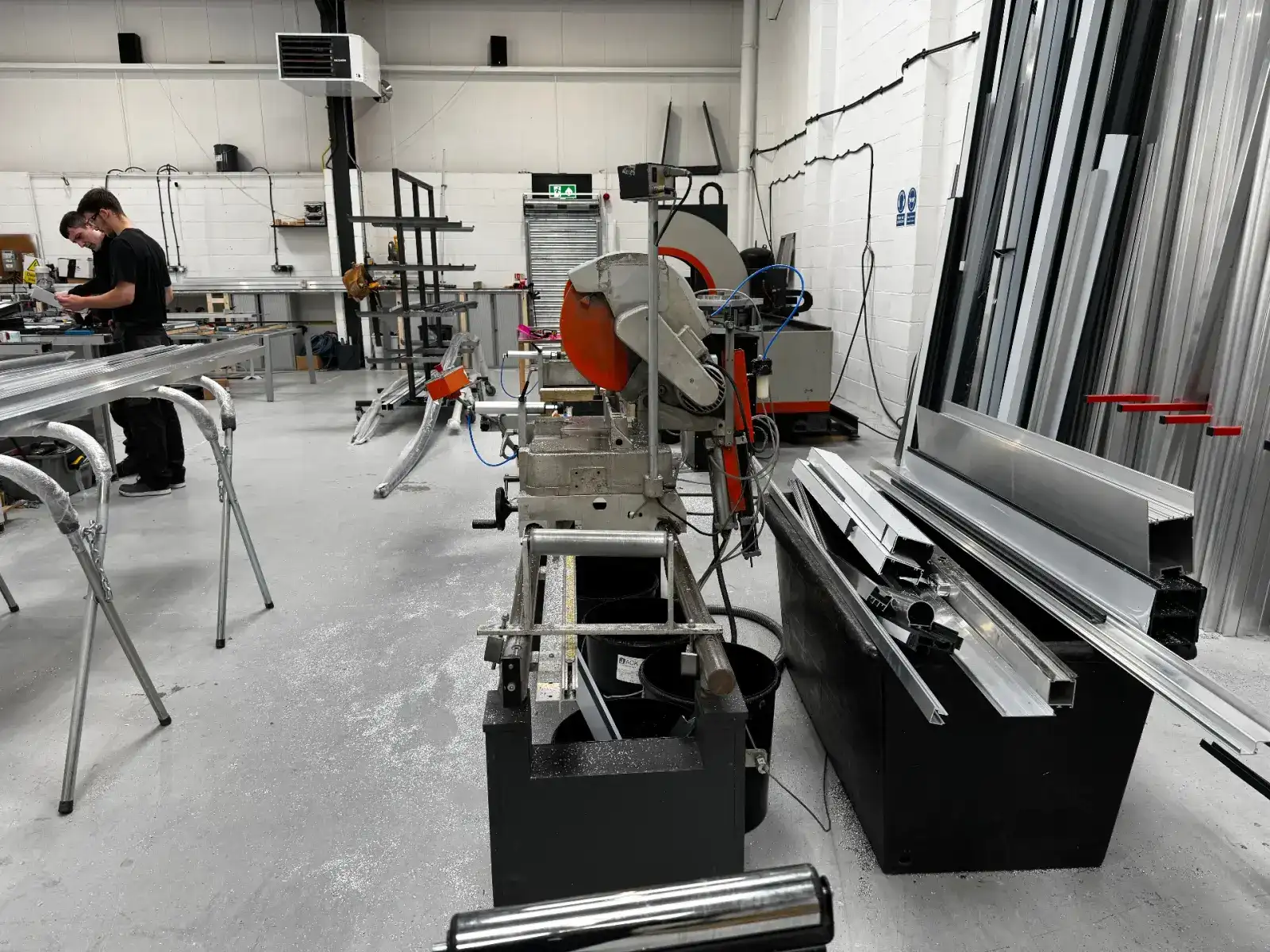
A double-mitre saw cuts each extruded profile to length — 45° mitres and 90° square ends — from the approved cutting list.
Machining and prepping
Lock cases, hinge and pivot preps, spindle holes, transom preps and drainage slots are machined on the CNC before assembly.
Corner joining
Corners are joined with mechanical cleats or hydraulic crimps. UK commercial aluminium is never welded.
Assembly checks
Swing doors are assembled and function-checked on the workshop jig as fabrication QC, not standards or certification testing. Wider frames and screens receive the checks appropriate to the approved product and supply format.
Gaskets, beads and hardware
EPDM gaskets run into the grooves, glazing beads are cut and matched per opening, and hardware is fitted or prepped to the manufacturer’s template.
QC and dispatch
The order is checked against the approved information; swing-door hardware is function-checked, and labelling, wrapping and palletisation are completed where required by the quoted arrangement.
One correction before the detail, because a lot of what ranks for this question was written for other markets: UK commercial aluminium systems are mechanically joined, not welded. Welding anneals the heat-treated alloy around the joint, distorts the slim profile walls and burns the powder-coated finish — so no UK systems house designs for it. If a guide describes welding a shopfront frame, it isn't describing UK trade practice.
And if you searched for how an aluminum storefront is fabricated — the US spelling — the logic below is the same; the framing systems, terminology and glazing standards differ.
Survey sizes, engineering and the cutting list
Fabrication starts before any metal is touched. What the fabricator needs from the installer is the brick-to-brick structural opening — width and height each measured at three points, because openings are rarely square — plus the hardware spec, the RAL colour, the threshold detail and where the doors sit in the frontage. If you're pricing a replacement on an existing frontage, our replacement survey checklist covers exactly what to record on site.
The frame is deliberately made around 10–15mm under the structural opening. That fitting deduction is what gives the installer a packing and adjustment gap — a frame made to the exact opening size would never go in.
Those sizes are engineered in LogiKal, which converts the approved elevation into a cutting list and the machining program for the CNC. CAD drawings are provided for sign-off where required so the manufacturing detail can be checked before fabrication starts.
Cutting and machining the profile
The profile arrives from the systems house as extruded bar length. A double-mitre saw cuts each piece to the approved cutting list — two heads cut both ends in a single setup, at 45° for mitred corners or 90° for square-cut junctions — using blades specified for aluminium.
Machining happens next: lock cases, hinge and pivot preps, spindle holes, transom preps and drainage slots are cut before assembly. The approved hardware make, model and template determine the preparation data.
Hardware preparation must match the selected components. Confirm the lock, closer, pivot, panic hardware and access-control details before cutting so the workshop can use the correct templates and approved positions.
Crimped vs cleated corners: where is each used?
Both are mechanical joints — the difference is how the cleat is held in the profile, and it decides which parts of a shopfront each is used on.
Cleated corners
Extruded aluminium corner cleats sit inside the profile chambers across the mitre and are mechanically pinned or screwed in place, with the joint sealed where the system requires it. This method is used for relevant shopfront framing and fixed-screen details.
Crimped corners
A hydraulic crimping press deforms the profile wall onto a serrated cleat to form a permanent joint. Kingsland uses the system-specified crimped detail for applicable door leaves.
The selected system detail determines the joint: relevant fixed frames and screens use cleated construction, while applicable door leaves use crimped joints. For the terminology in context, the fabrication section of our glossary covers cleats, crimps and the rest of the workshop vocabulary.
What is a fabrication jig and why does it matter?
A jig is a flat, square reference surface used to assemble and check a swing door. Comparing the corner-to-corner diagonals verifies whether the assembled geometry is square against the approved information.
A frame can be in tolerance on every single cut and still rack into a parallelogram when it's joined off-jig. Nothing about the individual parts is wrong — the geometry of the assembly is. Checking the assembled geometry before dispatch helps identify that issue before the installer offers the frame up to the opening.
Every Kingsland swing door is assembled and function-checked on the workshop jig before dispatch. This is workshop fabrication QC, not standards or certification testing; it lets us check the leaf, frame and hardware against the approved information before your team attends site.
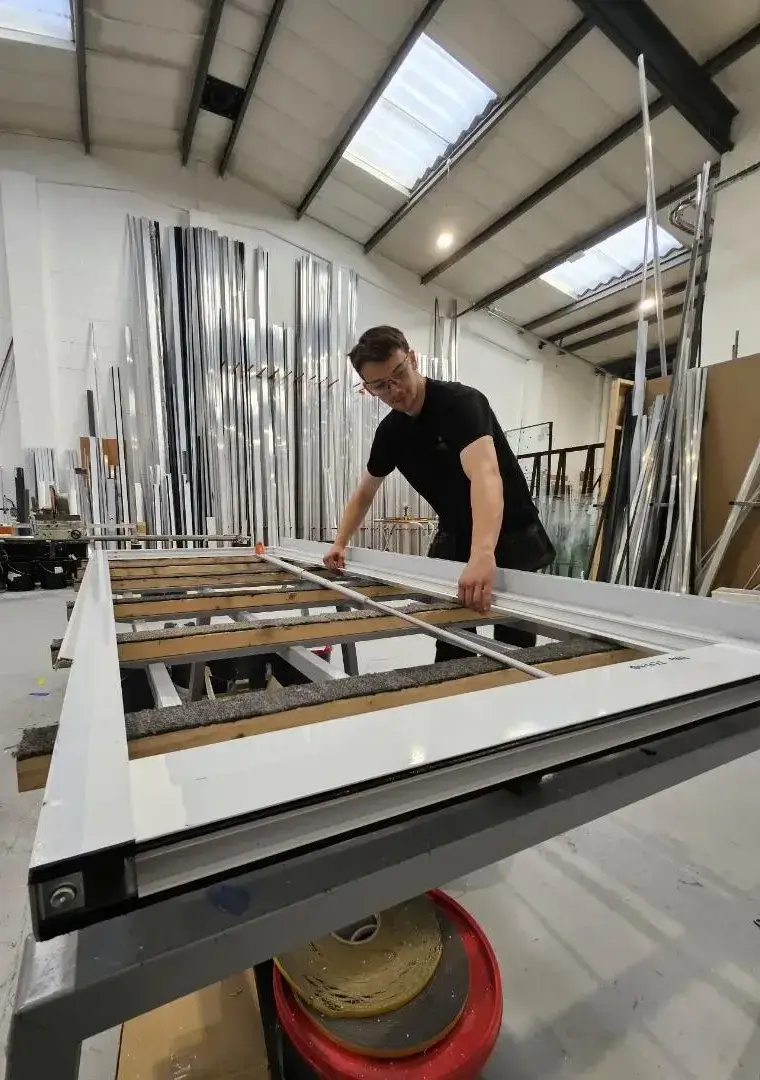
"A frame can pass every measurement as parts and still be wrong as an assembly. The jig is where we find that out — not your engineer or installer, on site, with the old frontage already out of the hole."
— Stephen Chappell, Managing Director
Gaskets, beads, hardware and glazing prep
With the frame square, the sealing and hardware layers go on. EPDM gaskets are run into the profile grooves, and snap-in glazing beads are cut and matched to each opening — supplied labelled to the aperture they belong to, so nothing gets shuffled on site.
Hardware is either fitted or prepped, depending on the item: floor-spring and pivot preps, transom closer preps, lock cases, keeps and panic hardware preps — all machined on the CNC to the hardware manufacturer's template, as covered above. On the glazing side, the JD47 shopfront system accepts 6–28mm infills, which covers everything from a single-glazed retrofit to a 28mm double-glazed unit in one system. Door leaves are glazed and beaded in our workshop where specified, so they arrive ready to hang; display-zone glass on a larger frontage is commonly glazed on site by the shopfitter. The glazing section of the glossary unpacks the spec language.
Quality control, labelling and delivery
Before anything is wrapped, each order goes through a final check:
- Cut lengths verified against the cutting list, so what was engineered is what was made.
- Swing-door diagonals checked on the workshop jig against the approved fabrication information.
- Specified swing-door hardware operated — locks, hinges and closers are checked as applicable before packing.
- Finish inspected for coating defects and handling marks while a fix is still a workshop job.
- Opening-reference labels applied where required using the agreed schedule convention.
The quotation and approved detail confirm the fabricated frames, glazing, beads, gaskets, fixings, hardware, loose items, drawings and labelling included. The order is then prepared for the collection or palletised delivery arrangement stated on the quotation.
One honest note on what workshop checks can't fully control: transport. A frame can rack in transit if it is badly restrained, which is why fabricated sections are braced, wrapped and checked before dispatch. Any transport condition still has to be assessed separately from the workshop record.
How long does fabricating a shopfront take?
Two different clocks answer that question. Once the profile is coated and the cutting list is loaded, the workshop sequence covers cutting, CNC machining, assembly and checks. The calendar clock also includes information approval, powder coating, glass and hardware procurement, packing and delivery planning. Allow approximately 21 working days for general planning. The quotation confirms the current lead time, its start point, the exact date and any product- or specification-specific exceptions.
A non-stock RAL colour can add a coating cycle, special glass has its own procurement time, and unusual hardware can affect the schedule. Give us the full specification and required delivery date with the enquiry so the quotation can state the current achievable lead time. A failed frontage should be made safe separately while its permanent made-to-order replacement is fabricated.
Should you fabricate your own shopfronts, or buy them fabricated to size?
In-house fabrication needs system-appropriate cutting, machining, corner-joining, assembly, extraction and handling equipment, plus premises, people, software, training, compliance and profile stock. Price those requirements using current supplier and employment figures.
Compare the fully loaded in-house cost at realistic year-round volumes with current supply-only quotations for the same product mix. Under supply-only, the customer provides the approved survey or project information and retains installation, while Kingsland fabricates and checks the quoted order. See what supply-only means in practice and how our trade-supply process works.
Kingsland is a supply-only fabricator, so use our quotation as one input rather than treating this guide as independent financial advice. The detailed cost comparison covers machinery, labour, premises, stock, compliance and waste.
Frequently asked questions
Are aluminium shopfronts welded together?
No. UK commercial aluminium systems are mechanically joined with corner cleats or hydraulic crimps. Welding anneals the heat-treated alloy, distorts the profile and destroys the powder-coated finish — guides describing welded shopfronts are describing practice in other markets, not how UK trade fabrication works.
What tools do you need to fabricate an aluminium shopfront?
The setup can include a double-mitre saw, copy router or CNC machining centre, system-appropriate corner-joining equipment, assembly benches or jigs, extraction, compressed air and profile handling. Build the investment case from current equipment, premises, labour, software, training, compliance and stock quotations.
What aluminium systems are shopfronts fabricated from?
Commercial systems supplied as extruded bar length by systems houses — Jack Aluminium (JD47, TD68), AluK, Kawneer, Senior Architectural Systems, Smart Systems and others. The systems house extrudes the profile; a trade fabricator like Kingsland cuts, machines and assembles it into finished shopfronts and doorsets.
What tolerance is a fabricated shopfront frame made to?
Cut lengths are held to a millimetre or better, and the assembled frame is checked square on a jig by comparing its diagonals. The frame itself is made around 10–15mm under the structural opening size to leave a fitting and packing gap for the installer.
Can I buy an aluminium shopfront fabricated to my sizes?
Yes — that is exactly what a supply-only trade fabricator does. Send survey sizes, hardware specification and colour; you get back a fabricated order with the specified beads, gaskets and fixings, delivered palletised throughout mainland Britain. Every swing door is assembled and function-checked on the workshop jig before dispatch; this is fabrication QC, not certification testing. Allow approximately 21 working days for general planning. The quotation confirms the current lead time, its start point, the exact date and any product- or specification-specific exceptions.
Keep reading
Aluminium Shopfront Systems
The complete frontage as coordinated JD47 + JCW fabrication — frames, display zones, signage zone and entrance doors from one supplier.
Shopfront Fabrication for Shopfitters
How we work with shopfitters and fit-out contractors — quoted from your survey or elevation and fabricated against the agreed schedule.
Supply-Only Trade Fabrication
What supply-only means in practice, where our work ends and your fit begins, and why it keeps your margin clean.
Aluminium Fabrication Glossary
Cleats, crimps, preps, sightlines and the rest of the workshop vocabulary used on this page, defined in plain trade language.
If you'd rather fit shopfronts than fabricate them, talk to us. Call 01925 500 295 or send the product type, sizes or a sketch through the contact form. We will review the specification and prepare a quotation, with CAD drawings where required.