
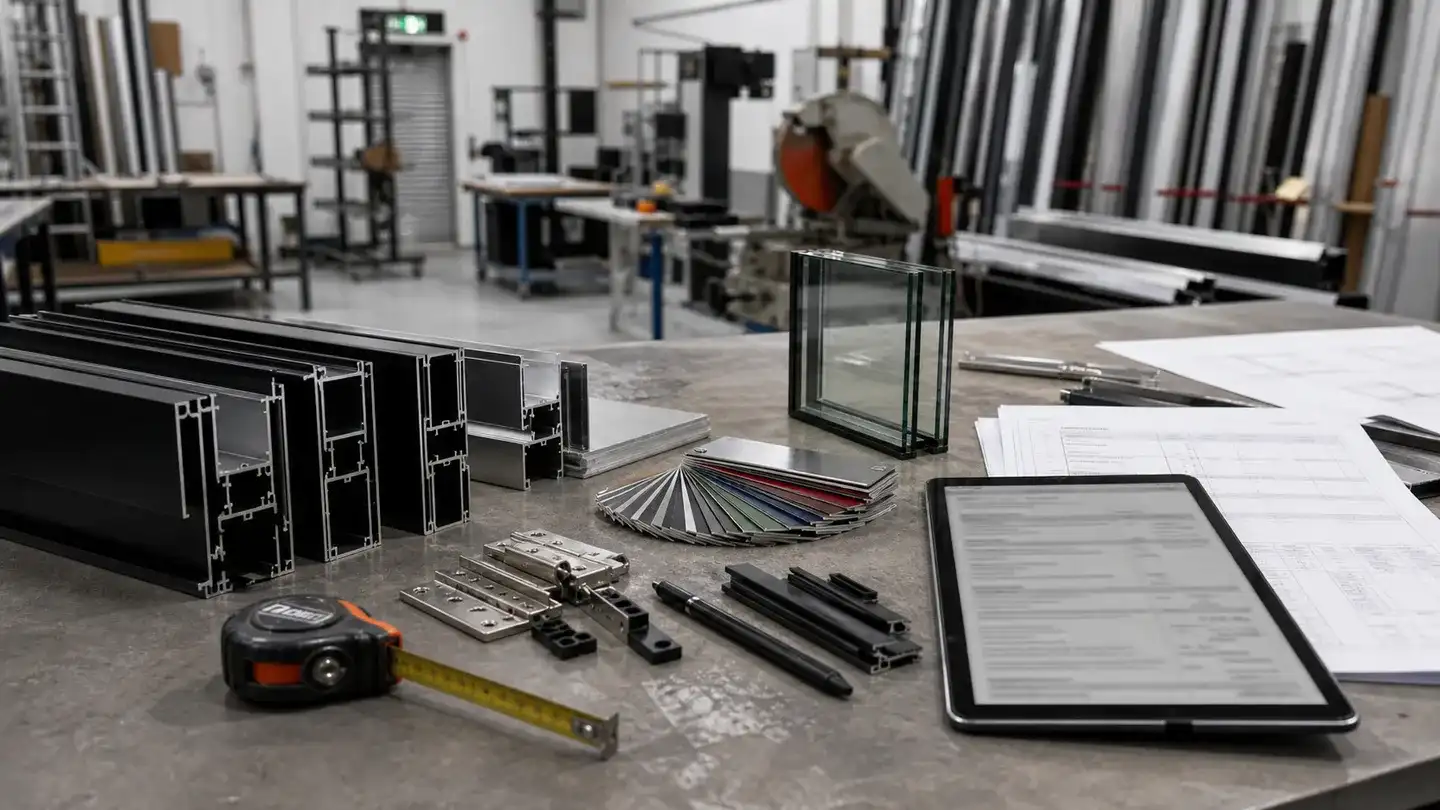
Supply-Only Aluminium Shopfront and Curtain Walling Cost per m²
A supply-only aluminium shopfront is priced per project, not per square metre: the fabrication-only cost is set by whether the screen contains a door, the glazing specification, the profile system, the powder-coat finish and the overall size — and it excludes the installation labour, access, disposal, installer margin and VAT that make up a large share of the “fitted” figures published in consumer cost guides. That is why a trade buyer fitting their own work pays materially less than published installed rates suggest.
By Stephen Chappell, Managing Director, Kingsland Fabrications. Updated 3 July 2026. Supply only for trade and commercial customers; we don't install.
What does a supply-only aluminium shopfront cost per m²?
The honest trade answer: there is no single per-m² rate that would price your job accurately, because the door content, glass specification and finish move the number far more than the area does. What we can tell you — from our own trade quoting, not figures recycled between cost blogs — is how the number is built, which decisions move it most, and why supply-only fabrication comes in well below the installed figures you have probably already read. Understand that and you can budget a frontage before you ever send a survey.
Everything we fabricate is bespoke, made to order in Warrington on Jack Aluminium systems — the JD47 shopfront and JCW curtain walling platform — and quoted from your survey or drawings, with CAD drawings where required. This page is the pricing logic behind that quote, not a price list.
"Two shopfronts of identical area can quote a long way apart. The one with a double-leaf entrance, panic hardware and acoustic glass isn't the same product as a plain glazed screen — and any per-square-metre rate that pretends they are will mislead the estimator using it."
— Stephen Chappell, Managing Director
Why supply-only isn't the figure you've read elsewhere
Almost every shopfront cost figure published online is a supply-and-install price including VAT, written for shop owners commissioning the whole job. If you are a shopfitter, installer or maintenance company fitting your own work, those numbers describe a different purchase from the one you are making. A supply-only fabrication quote covers the made-up frames, glass, hardware and delivery — nothing else — and trade quotations are ex VAT.
To reconcile the two sets of numbers, look at what an installed price carries that a fabrication price does not:
- Installation labour. The fitting team's time on site — usually the largest addition, and the one that varies most with access and programme.
- Removal and disposal. Taking out the failed or outdated frontage and disposing of the glass and metal.
- Access and making good. Hoarding, access equipment, out-of-hours working on trading high streets, and finishing the reveals after the frame goes in.
- The installer's margin and risk. The company selling the installed job prices in its overhead, warranty exposure and profit on the whole installed job.
- VAT. Consumer-facing guides quote inclusive figures; trade supply prices are quoted ex VAT.
Strip those layers out and the fabrication-only cost per m² — the part a trade buyer actually pays a fabricator — is a substantially smaller number. That is the whole commercial point of supply-only trade fabrication: the installation value stays in your business, not in a middleman's installed price. This page is written for shopfitters, installers, glaziers and maintenance contractors buying frames for their own teams to install.
The cost anatomy of a shopfront quote
Every supply-only shopfront quote we issue is built from the same six lines. Knowing them tells you where a quote can move and where it can't.
Profile and frame
The aluminium sections themselves — mullions, transoms, door frame and thresholds, cut and machined to your survey. The JD47 shopfront system runs a 47mm frame depth with 50mm sightlines; the metal content scales with bay count and framing density, not just overall area.
Glass
The JD47 accepts anything from 6mm single glazing to 28mm sealed units. Standard toughened glass is the baseline; laminated, acoustic or solar-control units step the glass line up sharply — often more than any framing decision does.
Door and hardware
Floor springs or pivots, locks, panic hardware, finger guards and closers. On most shopfronts the entrance door plus its hardware is the single largest line — a plain glazed screen with no door is the cheapest square metre on the elevation.
Fabrication labour
Cutting, machining, assembly, checking, glazing and beading. Doors, automatic-operator preparation and non-standard details raise the labour content; simple fixed lights require less workshop time.
Powder coating
Polyester powder coat across the full RAL range through a Qualicoat-approved supplier. A single standard RAL is the baseline; dual-colour (different inside and out) and special finishes add a coating pass and cost.
Delivery
Palletised dispatch from our Warrington workshop to your depot or site, labelled by opening reference, throughout mainland Britain. One drop to one address is the baseline; phased releases add handling.
Unsure of any of the spec language behind these lines? The glazing and profiles sections of our glossary cover the terms that drive each one.
The six drivers that move a shopfront quote most
Ranked in the order we see them move real trade quotations — a ranking only a fabricator can give you, because we price these lines every working day.
Doors within the screen
Each entrance leaf adds its specified closer or pivot set, locking, panic hardware where required, threshold, fabrication and workshop jig function-check time. Compare the quoted frontage with and without a door, and price single- and double-leaf configurations separately.
Glass specification
Options range from 6mm toughened single glazing to 28mm double-glazed sealed units, then laminated, acoustic and solar-control build-ups where the system and brief require them. State the required performance so the quotation prices the appropriate build-up rather than an assumed upgrade.
Profile system choice
The non-thermal JD47 has a 47mm profile depth and 50mm sightlines for retail shopfront routes. Where the project requires a thermally broken entrance, TD68 uses a 68mm profile depth and accepts glazing from 24mm to 44mm. The quotation confirms the cost of the selected system and specification.
Finish
A single standard RAL polyester powder coat is the baseline. Dual-colour finishes, non-stock colours and special effects add a coating pass and lead time. On a branded retail roll-out the finish is fixed by the client — price it in from the first quote rather than discovering it at order stage.
Overall size and bay count
Bigger screens carry more material, but the per-m² figure usually falls as area rises because the fixed costs — drawings, set-up, delivery — spread across more square metres. A screen broken into many small bays carries more frame per m² than the same area as fewer, larger lights.
Delivery and release sequence
A single palletised delivery from Warrington to one address is the baseline. Long-distance drops and phased releases tied to a fit-out programme add handling. Give the delivery addresses, release sequence and required dates at quote stage so they can be priced and scheduled properly.
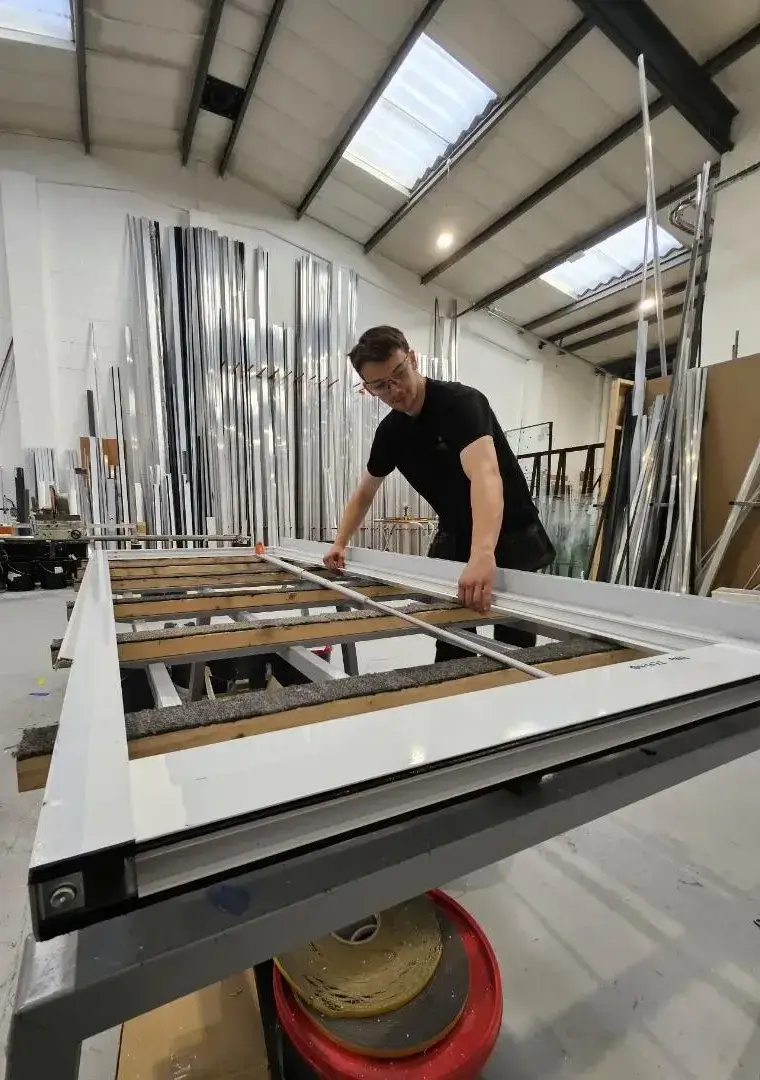
Curtain walling cost per m², supply-only
Curtain walling prices on a different logic from shopfront framing, even when the two sit side by side on the same frontage. A shopfront quote is dominated by its doors and hardware; a curtain walling quote is dominated by structure and glass — the spans between fixings, the wind loading the mullions must carry, the bracketry tying the grid back to the building, and the weight and build-up of the glazed units. Our JCW system runs 50mm sightlines with three mullion and transom section options so the metal content can be matched to the span rather than over-engineered everywhere, spans up to 13 metres, and accepts glazing up to 32mm including acoustic units.
That structural logic produces the counter-intuitive result estimators trip over: across a large, uninterrupted glazed area, curtain walling can carry a lower per-m² rate than a door-heavy shopfront, because fixed glazing is the cheapest square metre on any elevation. Across a small entrance screen, the same fixed engineering — drawings, brackets, sections sized for wind load — spreads over few square metres and pushes the rate up. The spandrel-to-vision mix moves it again: opaque zones swap vision glass for back-pans and insulation with their own build-up cost.
We cover the full breakdown — cost anatomy, stick versus unitised, and the seven variables that move a curtain walling quote — in our dedicated curtain walling cost guide. The two pages follow the same rule: the logic is published, the number comes from your spec.
A worked example — the same 4-metre screen, two specs
To show the drivers in action without inventing figures, take one 4-metre single-bay retail frontage quoted two ways. The area is identical. The quotes are not — and every difference maps to a line in the cost anatomy above.
Screen A — the lean spec
- JD47 non-thermal framing, plain glazed screen, no door
- Standard toughened single glazing
- Single stock RAL polyester powder coat
- Simple two-light layout — minimal framing per m²
- One palletised delivery to one address
Mostly frame and flat glass, little labour. This is the cheapest configuration a shopfront can take, and the per-m² figure it produces flatters every estimate built on it.
Screen B — the loaded spec
- Same 4m elevation with a centre entrance door on a floor spring
- Panic hardware, finger guard and locking to spec
- 28mm double-glazed sealed units throughout
- Dual-colour finish to match the client's brand standard
- Phased delivery to suit the fit-out sequence
The door and hardware become the largest single line, the glass line steps up, the finish adds a coating pass and phased delivery adds handling. Same area — a materially higher quote.
Neither screen is over-specified — each is right for its job. And if Screen B's project demanded thermal performance at the entrance, the door would step up again to the thermally broken TD68 commercial door. The point stands: quoting a shopfront from someone else's per-m² number is how tenders go wrong. Quote it from the spec.
How trade account pricing works
Regular trade accounts price better over time — not because of a published discount tier, but because repetition takes cost out of the process. When a shopfitter's survey format, preferred hardware and sign-off loop are standardised with us, quotations need fewer queries and the risk contingency a fabricator prices into an unknown customer's first job can reduce. There is no minimum order, so a new customer can start with a single frame before moving repeat work.
Every quote — first job or five-hundredth — sets out what will be fabricated, with CAD drawings where required, beads, gaskets and fixings where specified, and palletised delivery from Warrington throughout mainland Britain. Every swing door is assembled and function-checked on the workshop jig before dispatch; this is fabrication QC, not certification testing. Allow approximately 21 working days for general planning. The quotation confirms the current lead time, its start point, the exact date and any product- or specification-specific exceptions. The details of how that works job to job are on our aluminium shopfront product page.
Frequently asked questions
How much does a 4-metre aluminium shopfront cost supply-only?
It depends almost entirely on whether the screen contains a door and what glass is specified. A plain 4m glazed screen in the non-thermal JD47 profile with standard toughened glass sits at the low end of shopfront pricing; add a floor-spring entrance door with panic hardware and double-glazed sealed units and the same elevation quotes materially higher — the door is the single biggest adder. Send your sizes and specification for a supply-only quotation.
Why are supply-only shopfront prices lower than the per-m² figures published online?
Most published shopfront cost guides quote supply-and-install prices including VAT, written for shop owners. A trade buyer fitting their own work pays for fabrication and delivery only — installation labour, access, removal and disposal of the old frontage, and the installer’s margin are all excluded, and trade quotations are ex VAT. The two sets of numbers describe two different purchases.
What drives the cost more, the frame or the glass?
For a plain glazed screen the frame and fabrication dominate. Add a door and the door plus its hardware becomes the largest single item. Glass swings hardest with specification — moving from standard toughened glass to acoustic or laminated sealed units can change the quote more than the choice of frame system does.
Why don’t you publish a shopfront price list?
Because two screens of identical area can quote a long way apart depending on doors, glass, finish and configuration — and aluminium billet, glass and coating prices move over time. A published per-m² rate would mislead more than it helps. A firm number comes from a quotation against your actual sizes and specification, with CAD drawings where required.
Is curtain walling cheaper than shopfront framing per m²?
Sometimes, counter-intuitively. Over large uninterrupted areas curtain walling can carry a lower per-m² rate than a door-heavy shopfront, because doors, hardware and thresholds are the expensive parts of a frontage. Over small areas the fixed engineering and bracketry push the curtain walling per-m² figure higher. Spans and glass specification decide it.
Keep reading
Aluminium Shopfront Systems
The JD47 + JCW platform itself: complete frontages with doors, display zones and signage zones, fabricated supply-only in Warrington.
Curtain Walling Cost Guide
The companion page — cost anatomy, stick vs unitised, and the seven variables that move a curtain walling quote most.
Supply-Only Trade Fabrication
What supply-only means in practice, where our work ends and your fit begins, and why it keeps your margin clean.
Replacement Survey Checklist
Surveying a failed frontage for replacement? The measurements and details that get you an accurate quotation first time.
Per-m² ranges get you to a budget; your sizes and specification get you to a price. Call 01925 500 295 or use the quotation form — send your elevation and we will prepare a quotation, with CAD drawings where required.