
Aluminium Fabrication Lead Times UK: Shopfronts, Doors and Curtain Walling
Allow approximately 21 working days for general planning before the product and specification are fixed. The quotation is the source of truth for the current lead time, its start point, the exact date and any product- or specification-specific exceptions.
By Stephen Chappell, Managing Director, Kingsland Fabrications. Updated 3 July 2026. Supply only for trade and commercial customers; we don't install.
What can move the lead time by product
Use approximately 21 working days for general planning across the product range. The table shows common factors that can change the programme. The quotation confirms the current lead time, which approvals start it, the exact date and any exceptions for the selected product and specification.
| Product | System | General planning allowance | How it is confirmed | What moves it |
|---|---|---|---|---|
| Commercial entrance doors | JD47 / TD68 | Approximately 21 working days | Current timing, start point, exact date and exceptions on quote | Hardware supply, automation preparation, security specification |
| Standard shopfronts | JD47 | Approximately 21 working days | Current timing, start point, exact date and exceptions on quote | Colour (stock vs non-stock RAL), glazing spec, signage zone detail |
| Louvre doors and panels | Louvre | Approximately 21 working days | Current timing, start point, exact date and exceptions on quote | Panel layout, free-area requirement, door hardware and finish |
| Small curtain walling projects | JCW | Approximately 21 working days | Current timing, start point, exact date and exceptions on quote | Glass lead time, grid density, drawing sign-off and opening vents |
| Heritage-style doors | Heritage | Approximately 21 working days | Current timing, start point, exact date and exceptions on quote | Sightline detail, hardware, glazing and finish |
Guidance reviewed July 2026. Allow approximately 21 working days for general planning. The quotation confirms current timing, its start point, the exact date and exceptions; glass, grid size, interfaces and drawing approval can all change a curtain-wall programme. Our curtain walling cost guide explains the main variables.
The lead-time stack: where the days actually go
Fabrication lead time covers more than time on the saw. It includes information review, material and finish procurement, machining, assembly, checking, glazing where applicable, packing and delivery planning. The sequence below explains what happens; the quotation gives the current duration for your product.
Sizes in, quote out
Before the fabrication clock
Send sizes, configuration, finish, hardware and delivery details. We review the information and prepare a quotation, with CAD drawings where required. The quotation states the current lead time, its start point, the exact date and any exceptions.
Sign-off
Start point stated on the quote
The quotation tells you what must be confirmed before the lead-time clock starts. That may include the order, manufacturing sizes, drawing approval, finish, glass and hardware. Approving complete information promptly keeps the agreed date meaningful.
Profile from the systems house
Runs within the quoted lead time
We fabricate Jack Aluminium and compatible systems, and profile is called off for the order. Stock, extrusion and coating availability are checked when the quotation is prepared.
Powder coating
Runs within the quoted lead time
Polyester powder coating happens before fabrication, not after: profile is coated in length, then cut and machined. Non-stock, dual-colour and specialist finishes can affect the date, so the finish needs to be fixed before approval.
Machining and jig assembly
Runs within the quoted lead time
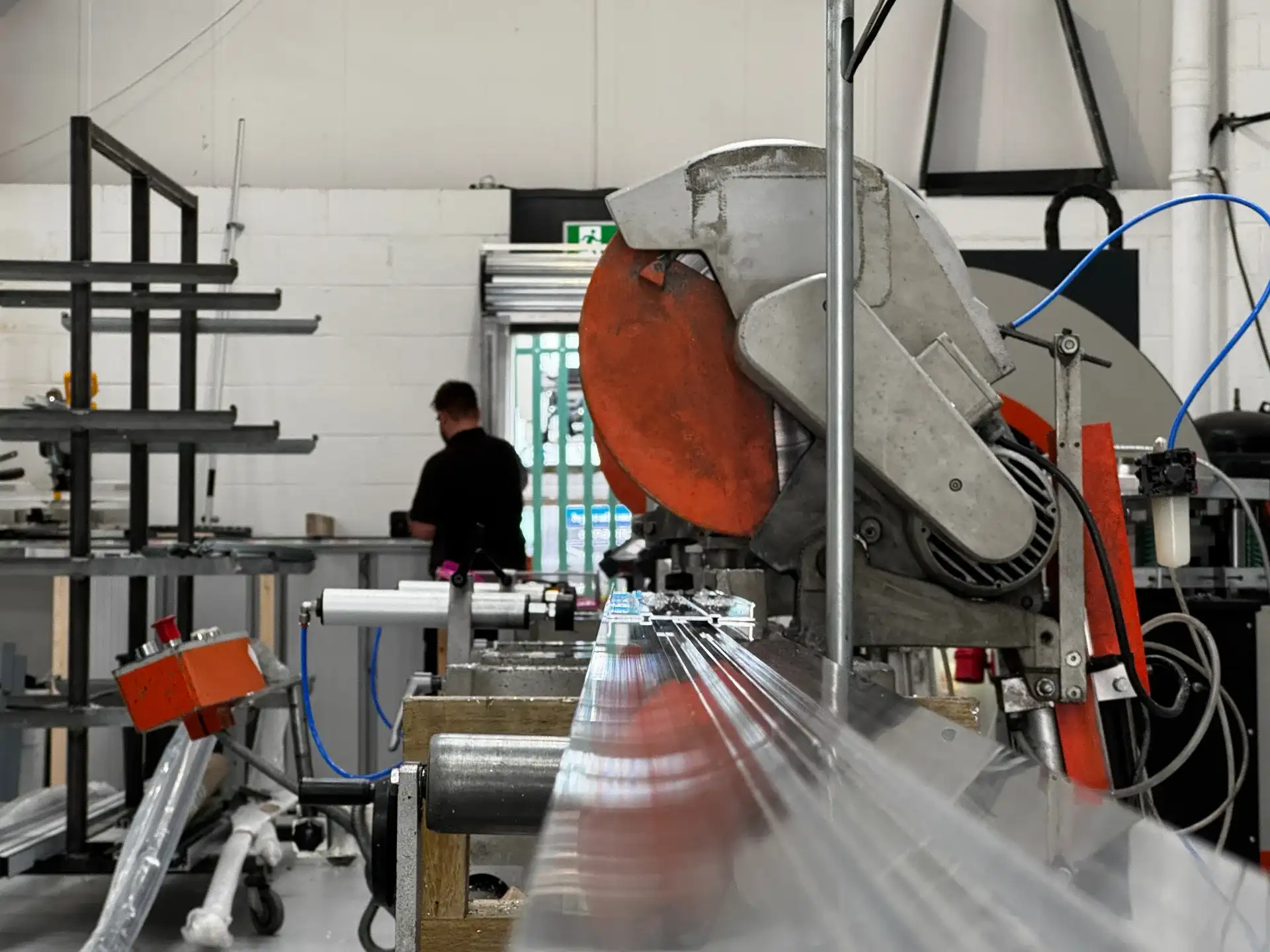
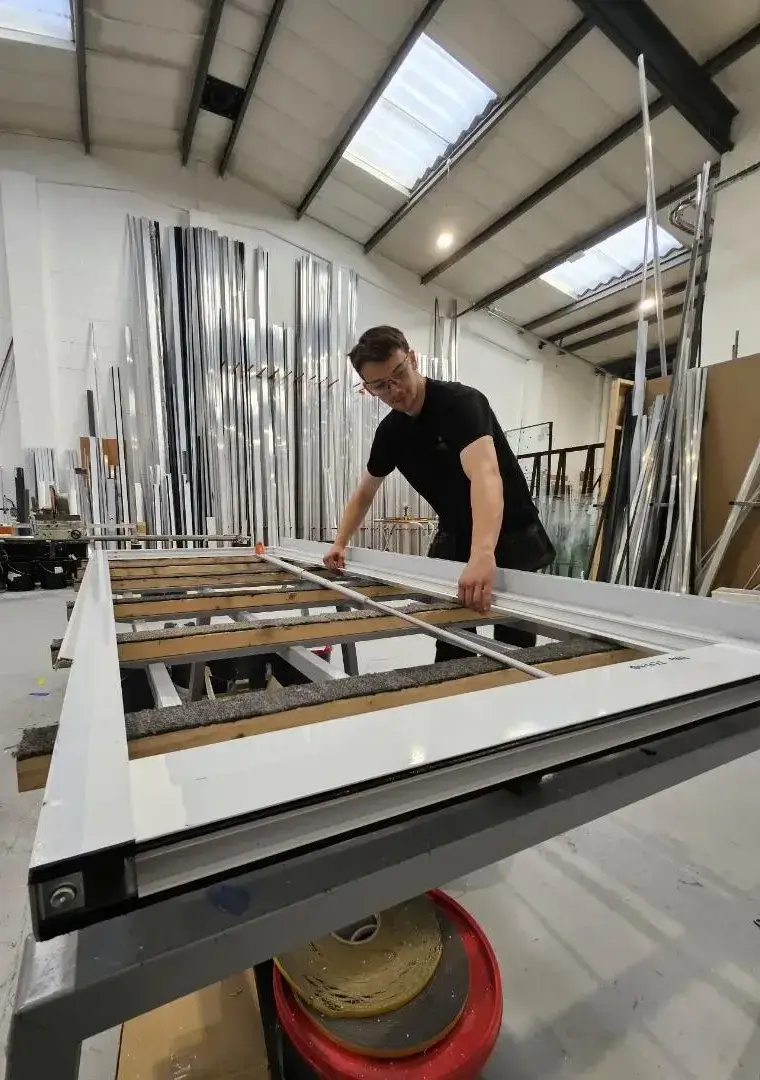
Profiles are cut and CNC machined, then cleated, crimped and prepared for hardware. Every swing door is assembled and function-checked on the workshop jig before dispatch as workshop fabrication QC.
Glazing and beading
Runs within the quoted lead time
Where factory glazing is specified, the quotation confirms the glazing and beading scope, glass availability and any effect on the fabrication date.
Prepare for collection or delivery
Collection or delivery confirmed on the quotation
The order is protected for transit, with opening-reference labelling and palletisation where required. The quotation confirms the post-dispatch delivery arrangement for the supplied postcode and access details.
Procurement and finishing matter as much as workshop capacity. A confirmed stock finish and standard glass are easier to schedule than an order-in RAL, specialist glass or unusual hardware. Send those details with the enquiry so the quoted date reflects the actual specification.
How much lead time does powder coating add?
It depends on profile availability and the finish. Non-stock RAL colours, dual-colour finishes and specialist coating specifications may require a separate coating run before fabrication can begin. We check coating availability when quoting and state any effect on the lead time before you order.
Aluminium profile is powder coated in length before fabrication, not sprayed as a finished frame afterwards. A colour change after sign-off can therefore require replacement profile and a new coating run. The quotation confirms the effect on cost and date.
The practical rule for anyone writing a programme: fix the colour at the same moment you fix the sizes. The full RAL range is available either way — the question is only whether your colour is sitting on a shelf or has to be made. The glossary covers the finish and standards terminology if the spec language is unfamiliar.
"Confirm the RAL finish with the sizes. If the colour changes after profile has been coated, replacement material and another coating run may be needed, so we recheck the date and cost."
— Stephen Chappell, Managing Director
Replacement doors use the normal fabrication lead time
Kingsland fabricates permanent supply-only replacements after the site or maintenance team has secured and surveyed the opening. Allow approximately 21 working days for general planning. The quotation confirms the current lead time, its start point, the exact date and any product- or specification-specific exceptions.
A complete survey helps us specify and quote the replacement without avoidable queries. Send:
- Sizes at three points. Width at head, mid-height and threshold; height at both jambs. Frames rack when they fail — one measurement isn't enough.
- Three photos. The full opening straight-on, the hinge or pivot detail, and the threshold. Photos answer the questions we'd otherwise have to ring you about.
- Hardware and pivot spec. Floor spring or pivot set, closer type, panic hardware and locking. Name retained hardware clearly and identify anything that must be supplied new.
- Colour. Give the RAL number if known, or include a clear daylight photo of the existing frame for initial matching. We confirm whether the finish affects the date.
Every swing door is assembled and function-checked on the workshop jig before dispatch. This is workshop fabrication QC, not standards or certification testing: it checks the leaf, frame and hardware against the approved information before your team attends site. Our replacement-order guide and replacement survey checklist cover the survey and order details.
Programming the glazing order: for shopfitters, main contractors and QSs
For a fit-out programme, freeze sizes, specification and colour before the quoted lead-time clock starts, then allow the full confirmed lead time plus a sensible site buffer before the installation slot. Use approximately 21 working days for general planning. The quotation confirms current timing, its start point, the exact date and any exceptions, including acoustic, fire-rated or oversized glass.
Supply-only fabrication keeps workshop production separate from site installation. Build the quoted fabrication date, the separately confirmed collection or delivery arrangement and a sensible site buffer into the construction programme. The order is prepared in Warrington for your team or appointed contractor to install, with palletisation and opening-reference labelling where agreed. How that split works in practice is covered in our supply-only trade fabrication guide.
Apply the same approximately 21-working-day general planning allowance to a curtain walling enquiry, then use the quotation-confirmed current lead time, start point, exact date and exceptions for the construction programme. Grid size, glass, interfaces and drawing approval can change the timing.
What extends a lead time — and what doesn't
Extends it
- Non-stock RAL — profile may need a separate coating run before fabrication can start; any effect is stated on the quote.
- Special glass — acoustic, fire-rated and oversized units run to the glass industry's schedule, not ours.
- Hardware supply chains — specialist closers, operators and access-control locking can outrun the aluminium.
- Size changes after CAD sign-off — a changed size after approval is a new order for the affected frames, not an edit.
Confirmed for each quotation
- Order volume and staging — the quotation accounts for the number, product mix and any agreed staged releases.
- Collection or delivery — transit begins after dispatch and the arrangement is confirmed separately for the supplied postcode and access details.
- Factory glazing or loose glass — the quotation confirms the glazing scope, glass availability and any effect on the fabrication date.
Approximately 21 working days is the general planning allowance. The returned quotation confirms the current lead time, its start point, the exact fabrication date, any product- or specification-specific exceptions and the separate collection or delivery arrangement.
Frequently asked questions
What is the standard lead time for a fabricated aluminium shopfront?
Allow approximately 21 working days for general planning. The quotation confirms the current lead time, its start point, the exact date and any product-, finish-, glass- or hardware-specific exceptions.
Can Kingsland provide an emergency replacement aluminium door?
Kingsland fabricates permanent replacements to order after the site team has secured and surveyed the opening. Allow approximately 21 working days for general planning; the quotation confirms the current lead time, its start point, the exact date and any exceptions.
What is the lead time for curtain walling?
Allow approximately 21 working days for general planning. The quotation confirms the current lead time, its start point, the exact date and any exceptions caused by grid size, glass, vents, interfaces or drawing approval.
Does powder coating delay fabrication?
It can. Stock and non-stock colours have different procurement requirements, and dual-colour or specialist finishes can add time. Confirm the finish before approval; any effect on the date is shown on the quotation.
When should a shopfitter place the fabrication order in a fit-out programme?
Freeze sizes, specification and colour before the quoted lead-time clock starts, then allow the full confirmed lead time plus a sensible site buffer before the installation slot. Check special-glass and hardware availability before fixing the programme.
Keep reading
Mainland Trade Delivery
How palletised delivery from the Warrington workshop works — booking, labelling by opening reference, and what arrives on the pallet.
Replacement Survey Checklist
The survey information needed to specify and quote a replacement door or shopfront without avoidable follow-up questions.
Curtain Walling Cost Guide
Curtain-wall cost anatomy, stick vs unitised construction, and the specification variables that move a quote and programme.
Aluminium Shopfronts
The complete JD47 + JCW frontage — frames, display zones, signage zone and entrance doors coordinated in one quoted programme.
Allow approximately 21 working days for general planning, then use the quotation-confirmed current lead time, start point, exact date and exceptions. Call 01925 500 295, or use the quotation form with the job, sizes, specification and requested dates.