
Installer Enablement
What We Check on a Swing-Door Jig Before Dispatch
The documented pre-dispatch check for Kingsland swing doors, plus the wider order checks for approved details, specified glazing, loose items and opening-reference labels.
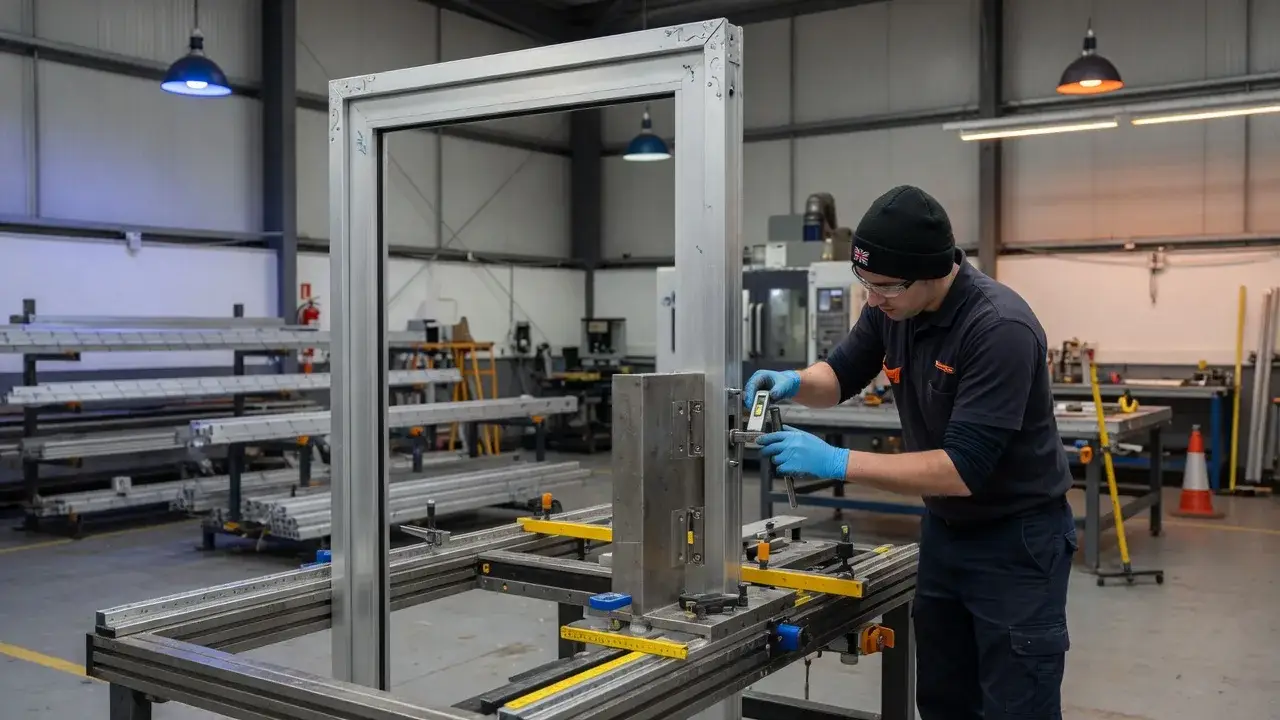
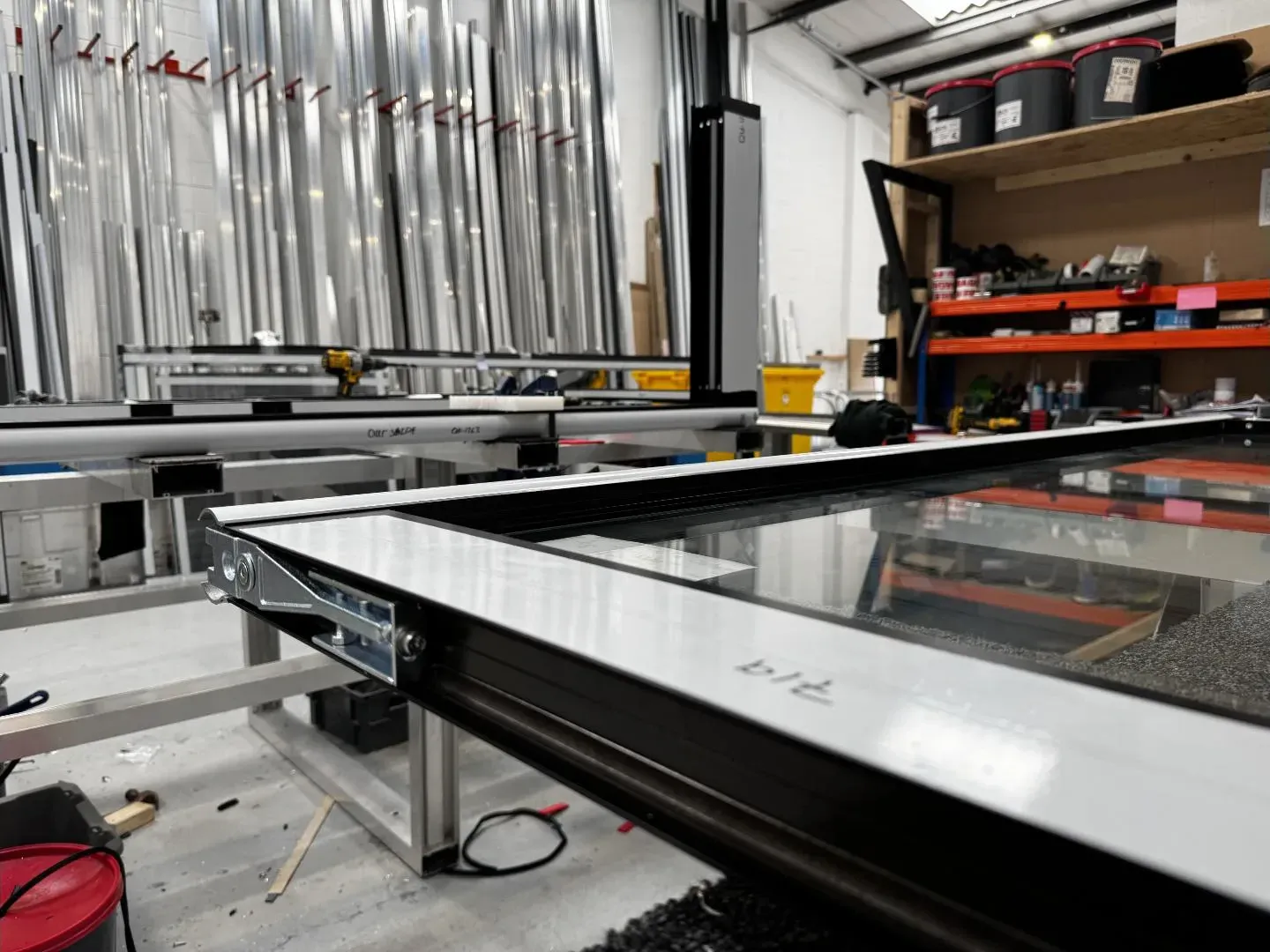
Kingsland swing doors are assembled and function-checked on the workshop jig before dispatch. This is workshop fabrication QC, not standards or certification testing. Wider orders are checked against the approved information, with glazing, loose items and labels supplied as stated on the quotation.
This checklist explains the swing-door workshop function-check and distinguishes it from checks that apply to the rest of an order. When comparing fabricators, ask which checks apply to the exact product and supply format being quoted.
For the commercial argument — why workshop function-checking can protect margin versus cut-and-ship supply — read what the swing-door workshop function-check covers.
Stage 1 — Documentation lock
Before any unit reaches the jig, manufacture only starts against confirmed specification:
- Signed CAD or approved quote dimensions
- Hardware schedule (lock type, closer, pivot/floor spring, panic hardware, access control prep)
- Threshold type and hand of door
- Glass spec and finish (RAL reference)
- Opening reference label assigned
No confirmed spec, no cut. This prevents the workshop building to an ambiguous email thread.
Stage 2 — Swing-door dimensional verification on the jig
The fabricated swing-door frame and leaf are placed on the jig table and checked against the approved fabrication information:
| Check | What we verify | Typical failure mode if skipped |
|---|---|---|
| Width (head and threshold) | Matches signed CAD within workshop tolerance | Leaf binds or shows uneven reveal |
| Height (both jambs) | Square and parallel | Diagonal twist — door drags at top or bottom |
| Diagonals | Frame square | Corner gasket gaps, closer misalignment |
| Frame depth | Profile sits correctly in rebate | Fixings pull frame out of true |
| Threshold position | Correct type fitted (100mm / 150mm / drained) | Water ingress or trip hazard |
On replacement work, the survey dimensions are the authority — not an assumed standard size from a catalogue.
Stage 3 — Hardware operation
Specified swing-door hardware is function-checked on the jig before dispatch:
- Hinges / pivots — full arc, no binding, correct backset
- Floor springs / closers — opening and closing force checked; hold-open and latch points verified
- Locks and panic hardware — engagement tested; cylinder orientation confirmed
- Access control prep — strike plate positions and conduit routes where specified Any issue identified during the workshop test is reviewed before dispatch.
Stage 4 — Weatherseals and glazing
Where the product includes glazing and beading in our workshop:
- Gaskets seated consistently — no gaps at corners or transom junctions
- Beads clipped and secure — external beading checked on shopfront and entrance products
- Drainage paths clear on drained thresholds
- Glass alignment and pocket clearance within system limits (per Jack Aluminium system tolerances)
- Manifestation or safety glazing markers where specified
Factory glazing is not universal across every product line. Swing-door leaves are pre-glazed and gasketed in the workshop where specified; other glazing and beading inclusions are confirmed on the quotation and checked as part of the applicable order process.
Stage 5 — Finish and presentation
- Powder coat inspected for handling damage, exposed metal and face consistency
- Protective film applied where required for transit
- Opening reference label applied — matches your schedule and PO
- Order completeness check — beads, gaskets, fixings, packers and specified hardware included
The completeness check is carried out against the quoted order detail before wrapping.
Stage 6 — Pass / fail gate
Pass: The applicable swing-door and order checks match the approved information. The order is wrapped and prepared for the quoted collection or delivery arrangement, with labelling and palletisation where required.
Issue found: The workshop reviews the dimensional, hardware or completeness issue and completes the agreed correction before dispatch.
This check records the workshop condition against the approved fabrication information; it does not replace the site survey or installation checks.
How this works on replacement orders
Replacement orders often start with a trade survey rather than an architect’s drawing pack. For a replacement swing door, the workshop jig function-check uses the approved information from that survey package:
- Outerframe and leaf sizes from the maintenance survey
- Photos of the failed unit for hardware and threshold identification
- Like-for-like or upgrade confirmation in writing
See replacing a failed commercial aluminium door for the survey fields that make the workshop function-check reliable on replacement work.
What you should expect when the order arrives
The intended handoff after a swing-door workshop function-check is:
- Unpack — labelled by opening reference
- Offer into opening — fit against the customer-approved survey dimensions
- Fix — pack, level and fix to the substrate using the specified method
- Commission hardware — complete the normal site adjustments and checks
- Hand over — retain a clear boundary between the workshop check and site installation
The workshop function-check cannot correct an inaccurate survey, substrate condition, transit damage or installation error. It records that the swing door received its fabrication-QC check against the approved information before dispatch; it is not certification testing.
Standing a swing door in the workshop, operating the specified hardware, checking seals and confirming the quoted contents before wrapping takes workshop time. Read what the swing-door workshop function-check covers for the process detail.
Use this checklist in supplier reviews
When you are evaluating or switching fabricator, ask which checks apply to the product you intend to order and what evidence accompanies it.
Send a single opening through the trade quotation form and ask us to explain the approval and workshop checks that apply to that specific product.
We manufacture in Warrington and deliver palletised fabricated orders throughout mainland Britain. Our delivery and collection guide explains what to confirm. Allow approximately 21 working days for general planning; the quotation confirms the current lead time, its start point, the exact date and any product- or specification-specific exceptions.