
Installer Enablement
What Jig Testing Checks Before an Aluminium Swing Door Leaves the Workshop
What the workshop jig function-check covers on fabricated aluminium swing doors before dispatch, and how that fabrication QC supports installation planning.
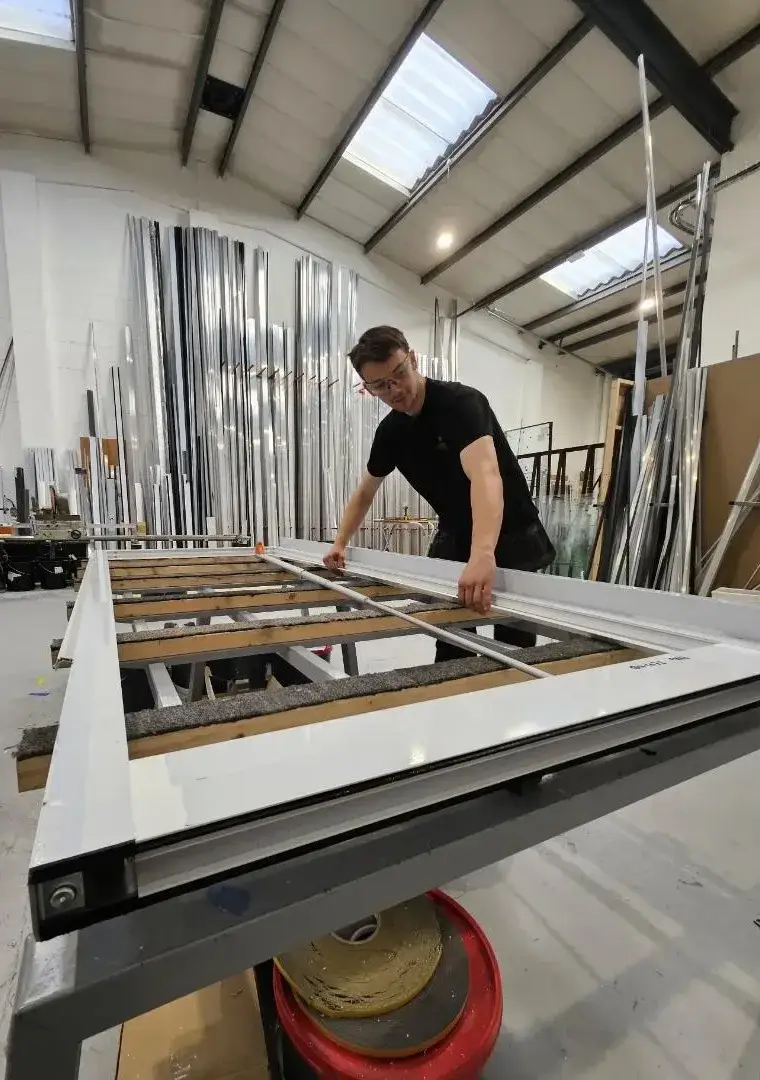
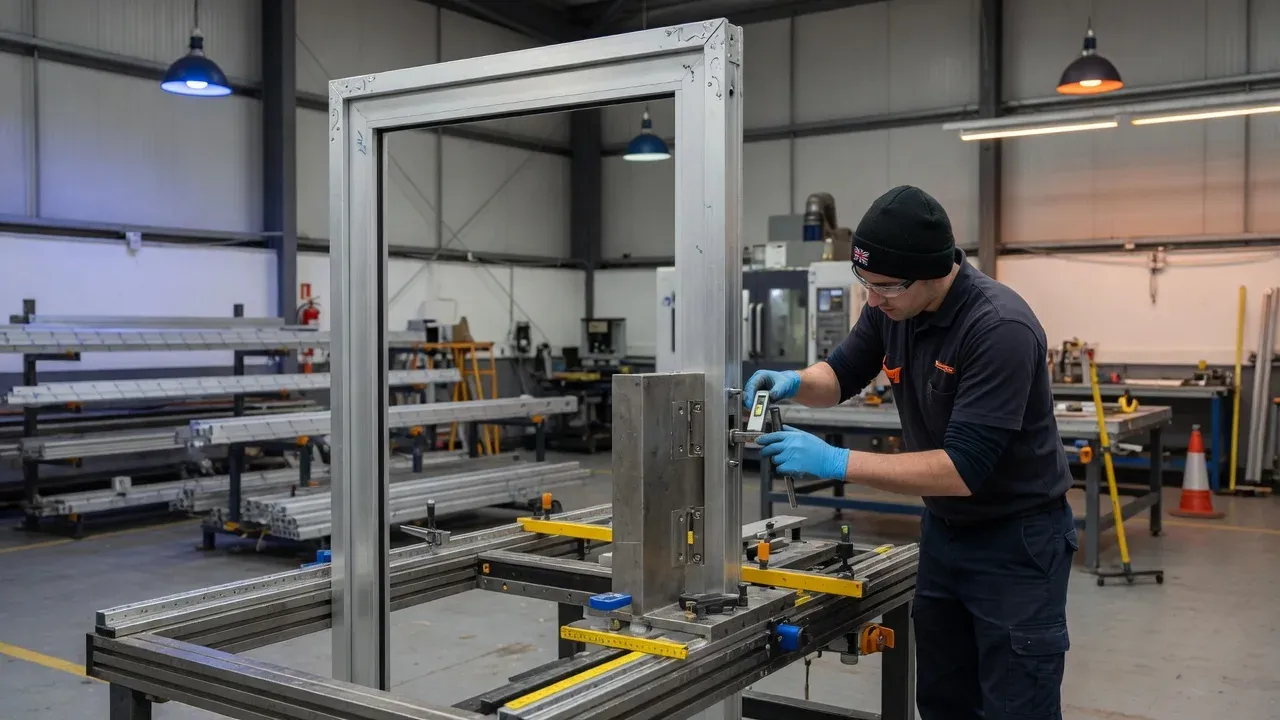
Compare more than the aluminium price. The quoted assembly, hardware preparation, glazing, checks and loose items can change the work left for the installation team.
If a unit has not been checked against the approved fabrication information, a dimensional, hardware or completeness issue may first become visible on site.
We built Kingsland around the opposite assumption: with supply-only trade fabrication, the workshop should complete the checks that belong in the workshop. Every swing door is assembled and function-checked on the workshop jig before dispatch, including its dimensions, hardware operation and specified glazing and gasket work. This is workshop fabrication QC, not standards or certification testing.
This post explains what the industry shorthand “jig testing” means here: an assembled swing-door workshop function-check, how it fits into the wider order checks and why that documented fabrication-QC step matters to installation planning.
What “jig-tested” means in practice
A fabrication jig is a fixed reference frame in the workshop that mimics the opening your installer will fit against. Before dispatch, we place the assembled swing door on that jig and function-check it against the signed-off dimensions, hardware schedule and operational requirements from your quote. That QC step does not create or replace a product standard, performance classification or certification.
That is not a visual once-over. It is a structured check:
- Dimensional verification — width, height, squareness and diagonals checked against the confirmed CAD or survey
- Hardware function — hinges, pivots, floor springs, closers, locks and panic hardware operated through full cycles
- Weatherseal engagement — gaskets and beads seated; drainage paths clear on drained thresholds
- Glazing and beading — factory-glazed leaves checked for bead security and glass alignment where applicable
- Finish and labelling — RAL finish inspected; opening reference labels match your schedule
Issues identified by these checks are addressed in the Warrington workshop before dispatch.
You can see the process on our about page — we publish workshop footage of assembled swing doors receiving the jig function-check before dispatch.
Questions to ask about alternative supply formats
Not every supplied product follows the same assembly and checking process. Before comparing quotations, confirm what arrives and which checks apply:
Assembly scope. Confirm whether the order arrives as assembled frames, a knock-down set or loose prepared components, and whether a physical assembly check forms part of the quoted scope.
Approved datum. Repeat production may use an approved schedule; replacement work normally depends on the surveyed opening. Confirm which dimensions control manufacture.
Workshop and site work. Establish what is completed before dispatch and what adjustment, assembly or preparation remains for the installer.
Order contents. Check the quotation for beads, gaskets, fixings, glazing, hardware, labels and any items supplied loose.
The right format depends on the product and installation plan. Compare the quoted contents, approved information and documented checks rather than assuming every supplier uses the same production process.
Why first-time fit protects installer margin
Three numbers matter more than the fabrication unit price:
1. Fit-time on site. A commercial entrance leaf that matches the approved sizes avoids unplanned packing, head adjustment and return visits. Those are the costs that erode the installation margin.
2. Callback rate. One free return visit on a maintenance contract can cost more than the fabrication margin you saved by choosing a cheaper supplier.
3. Customer confidence. End-clients do not separate fabricator quality from installer quality. If the door scrapes on day one, your reputation takes the hit — even when the root cause was a workshop tolerance error.
Testing cannot remove every site risk. An opening can differ from the survey, bought-in hardware can fail and products can be damaged in transit. It does, however, give the fitting team a documented workshop check against the approved information before dispatch.
Stephen rebuilt Kingsland in 2022 with Elumatec CNC and LogiKal/EluCAD engineering. Machining accuracy and assembly checks cover different stages of the fabrication process.
Why the workshop function-check affects the quoted scope
We will be direct: Kingsland is not the cheapest supplier. Swing-door assembly and workshop function-checking take time, and that fabrication-QC scope should be compared alongside the aluminium, hardware and lead time when quotations are reviewed.
The jig function-check takes skilled workshop time. Every swing door stood upright in the jig frame — hardware cycled, seals checked, squareness verified — adds a documented fabrication-QC step. The quotation confirms the beads, gaskets, fixings and loose items included. CAD sign-off is used where required to settle the approved dimensions before manufacture.
When comparing quotations, check whether that work is included. A lower figure may cover the aluminium and machining without the same assembly, functional or completeness checks.
The practical value is fabrication that has been checked before it reaches the customer’s site, rather than a fitting team discovering a workshop issue at the opening. The slightly higher line on the quotation can be cheaper than unplanned adjustment or a return visit.
We are not the right supplier if your only selection criterion is the lowest fabrication unit price. We are the right supplier if you price jobs on total installed margin — labour, programme, callbacks and customer confidence included.
How the checking process changes by product
The documented workshop jig function-check applies to swing doors. Other products are checked against the approved information before dispatch without implying that every item follows the same door-jig process.
Commercial entrance doors (TD68)
Pivot or floor-spring operation cycled. Lock and panic hardware engaged. Threshold type confirmed (100mm, 150mm, drained). Glazed leaves checked at full weight — TD68 pivots are rated to 250kg. See our commercial entrance door spec guide for the hardware schedule fields worth getting right at quote stage.
Shopfront doors (JD47)
For a swing shopfront door, the header bar is verified against the manual or automatic specification and the leaf is operated on the jig. Curtain-wall tie-in profiles are checked where the door integrates with JCW display zones.
Shopfronts (JD47 + JCW)
Coordinated frontages are checked as labelled sections so opening references match the approved elevation and the parts can be identified on site.
Curtain walling (JCW)
Frame sections are checked against the approved mullion/transom layout and glazing-pocket specification before palletising.
Windows (SW60 / TW70)
Tilt-and-turn and side-hung operation, locking points, restricted openings and gaskets are checked against the approved specification before dispatch. BS 6375 weather performance remains a system and configuration requirement, not a claim created by a workshop check.
How workshop jig QC connects to the quote process
The workshop function-check only works if the right specification reaches the workshop. That is why our process ties fabrication QC to confirmed documentation:
- You send survey, drawings or schedule with delivery postcode
- We return trade quotation plus CAD for sign-off where required
- You confirm PO and signed CAD — manufacture starts against locked dimensions
- We fabricate on Jack Aluminium profiles, CNC-cut and assembled in Warrington
- We check the order against those confirmed dimensions, including the workshop jig function-check for swing doors
- We dispatch the labelled and wrapped order, with beads, gaskets, fixings and loose items supplied as stated on the quotation
Skip the drawing or specification sign-off step and you are back to guessing. If you are switching fabricator during a project or repeat order run, put one representative opening through the full chain before moving the rest.
On replacement jobs, the survey drives the CAD. Our failed commercial door replacement timeline walks through what a clean survey package looks like.
What to ask before trusting a fabricator with repeat work
Use these questions in supplier evaluation — whether you are quoting us or anyone else:
- Which products receive an assembled workshop jig function-check, and how are the other products checked?
- What happens when a unit fails QC — remake in-house or expect site adjustment?
- Is CAD sign-off required before cutting?
- Are glazed leaves factory-beaded or supplied loose?
- Are beads, gaskets and fixings in the box — or billed separately?
- How are multi-opening jobs labelled?
- How do you record failed checks, remakes and site-reported fabrication issues?
A supplier should be able to answer those questions with a defined process rather than a broad quality claim.
For a detailed breakdown of each checkpoint, see our companion post: what we check on the jig table before dispatch.
The commercial case in one sentence
You are buying more than aluminium profiles: you are buying a fabricated order with a documented workshop check against the approved information before dispatch.
That is what the workshop fabrication-QC function-check buys.
Try it on one opening
If your current supplier’s orders regularly need on-site modification, send us one opening — survey, photos and hardware schedule. We will quote it, produce CAD for sign-off, fabricate it, then assemble and function-check the swing door on the workshop jig before dispatch.
Request a trade quotation or call 01925 500 295. Compare fit-time on that single job against your current supply chain. That is the only evaluation that matters.