
Installer Enablement
How to Switch Aluminium Fabricator Without Losing the Job
A practical guide for installers, shopfitters and maintenance contractors moving aluminium fabrication to a new supplier — what to check, how to transfer specifications and how to test the relationship on one opening.
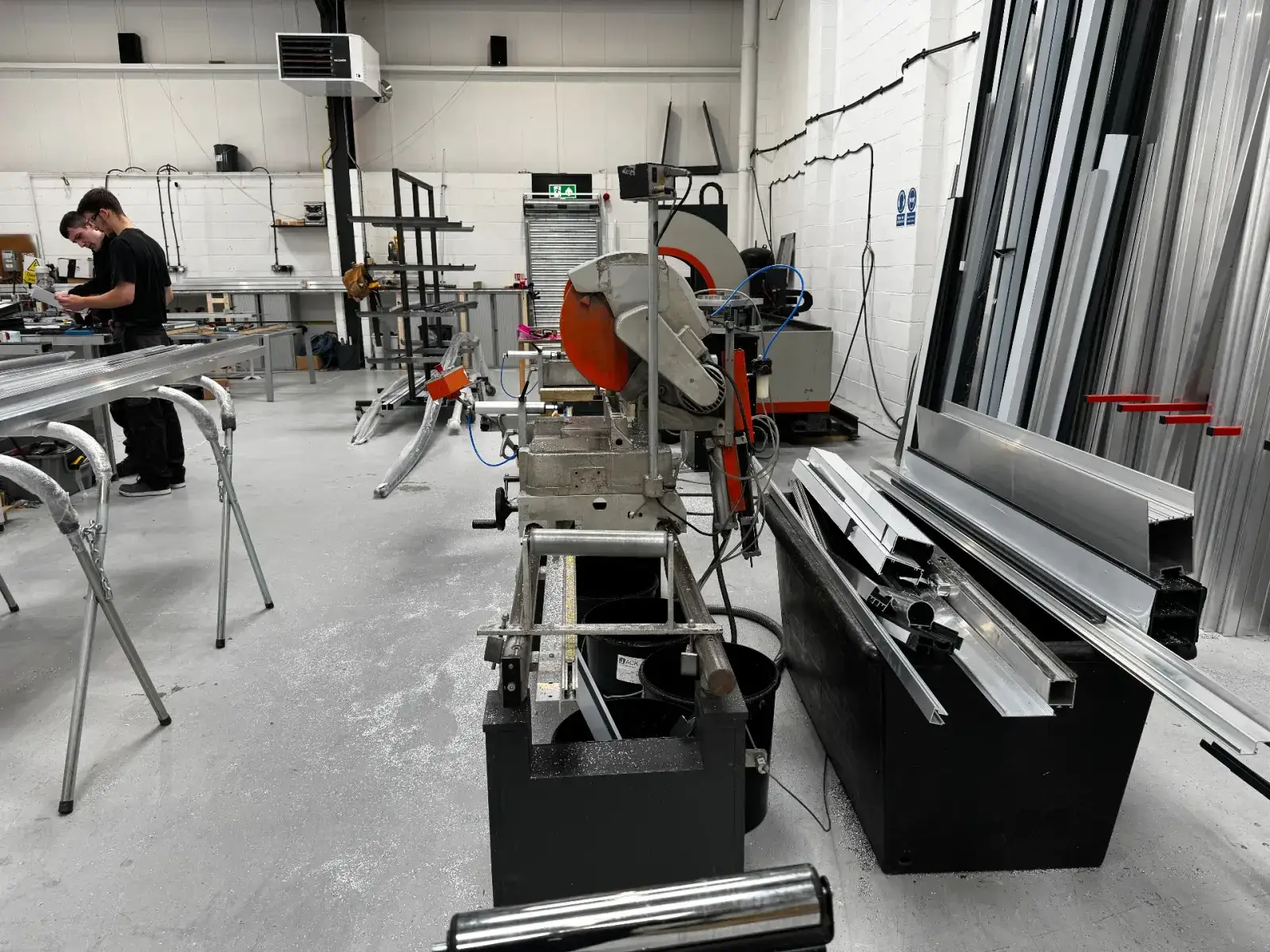
You do not switch aluminium fabricators because you fancy a change. You switch because the current supplier missed an agreed date, cut the wrong threshold, returned an unclear quotation or repeatedly left details for the fitting team to resolve on site.
The risk is not the switch itself. The risk is losing credibility with your customer while you re-establish supply. This guide is for installers, shopfitters, glazing contractors and maintenance businesses that need to move fabrication without losing information between suppliers.
When switching is the right call
Three situations where staying put costs more than moving:
1. Lead times no longer fit the work. If the supplier cannot state a realistic product lead time or repeatedly misses the date on the quotation, your margin carries the cost. Our replacement-orders page explains how we handle made-to-order products for maintenance contractors.
2. A missed order is holding up the site. One late shopfront can delay a retail fit-out. A new supplier should be able to give you a clear current lead time, identify exceptions and agree staged orders where the quantity warrants it.
3. Spec drift you cannot sign off. When quotes keep coming back with substituted profiles, unspecified hardware, or “we’ll confirm on site” caveats, the risk transfers to your fit team. That is when a clean switch beats another round of chasing.
Switching mid-job is viable when you treat it like a controlled handover, not a fire drill.
What to check before you send the first order
Run this checklist against any candidate fabricator before you commit an opening on a live contract.
Confirm who owns the installation
- Supply-only for trade and commercial customers. Confirm the fabricator will not compete for the installation on your patch. Kingsland fabricates on a supply-only basis; the customer’s team or appointed contractor retains the installation.
- No minimum order on single openings. Maintenance work and staged projects often need one leaf, one louvre panel or one window at a time.
- Review surveys as well as drawings. On replacements, you often have photographs and measured sizes rather than a formal drawing pack. The fabricator should tell you what else is needed to quote safely.
Technical fit
- System compatibility. If the job is on Jack Aluminium TD68, JD47 or JCW, confirm the new supplier fabricates on the same platform or can propose a tested equivalent with written deviations. Our Jack Aluminium compatibility guide maps which systems tie together on mixed schemes.
- Hardware schedule transfer. Locks, closers, panic hardware, access control prep and threshold types must carry over explicitly. “Like for like” without a schedule is how you get a 150mm threshold on a 100mm rebate.
- Finish match. RAL references age on site. Send daylight photos and, where possible, a physical sample. Powder coat from a Qualicoat-approved supplier reduces batch variance between orders.
Operational fit
- Quotation clarity. The supplier should identify missing detail, state what is included and avoid hiding assumptions in caveats.
- Lead-time honesty. Allow approximately 21 working days for general planning. The quotation should state the current lead time, its start point, the exact date and any product- or specification-specific exceptions.
- Delivery to your depot or site. Include the delivery postcode in the first enquiry. We manufacture in Warrington and supply palletised orders throughout mainland Britain, with the delivery arrangement and any agreed staged drops confirmed on the quotation. See delivery and collection for the process.
Quality signals
- Function-check swing doors before dispatch. A door assembled and function-checked on the workshop jig against the approved dimensions and hardware schedule is less likely to leave the installer resolving fabrication issues on site. This is fabrication QC, not certification testing.
- Labelled by opening reference. Multi-opening packages need labels that match your schedule — not a single crate marked “doors”.
- Clear order scope. The quotation states the beads, gaskets, fixings, hardware and loose items included. Missing components push cost into your labour line.
How to transfer specs without losing detail
Treat the handover like a structured data migration.
Step 1 — Package what you already have. Gather elevations, survey sheets, hardware schedules, glass specs, finish references and any signed-off CAD from the outgoing supplier. If the outgoing supplier will not release CAD, a dimensioned survey with photos is enough for us to quote — we do this daily on reactive commercial door replacements.
Step 2 — Flag deviations explicitly. Note anything that was value-engineered on the original order (thinner glass, alternate closer, non-standard head detail). The new fabricator needs to know what was actually installed, not what was on the architect’s first issue.
Step 3 — Run a single opening first. Before you move a larger project or repeat orders, send one representative opening. Assess the quotation, drawing quality, stated lead time, order completeness and fitting experience. If that opening works, scale the relationship.
Step 4 — Align PO and sign-off workflow. Confirm whether the new supplier needs signed CAD before cutting, how PO references map to opening labels, and who takes the call if something is wrong on site. Clarity here prevents “we thought you meant…” disputes mid-install.
System compatibility at a glance
Common switch paths include:
| Your existing install | Typical switch path | What to watch |
|---|---|---|
| TD68 commercial entrance | TD68 like-for-like | Pivot capacity, panic hardware, access control prep |
| JD47 shopfront door | JD47 like-for-like | Header bar type (manual vs automatic), curtain wall tie-in |
| JCW curtain wall zone | JCW capped or structural | Mullion/transom sizes, drainage path, acoustic glass |
| Older unnamed system | Current Jack equivalent | Threshold depth, hinge centres, glass pocket — survey critical |
| Mixed shopfront + door | JD47 + JCW coordinated | Single supplier for the full frontage avoids interface gaps |
If you are switching because the original system is obsolete, budget time for a site confirmation call. We would rather delay cutting by one day than remake a leaf because the survey missed a 5mm rebate detail.
First-order checklist
Use this on the first order to a new fabricator:
- Opening reference on every document (PO, survey, email thread)
- Delivery postcode and preferred delivery point (depot vs site)
- Hand of door and threshold type confirmed in writing
- Hardware schedule attached — not “same as before”
- Glass spec — thickness, IGU build-up, toughened/laminated
- Finish — RAL code plus site photo
- Signed CAD returned before manufacture starts
- Contact for site issues — name and direct line, not a generic inbox
Send the package via quick quote with product type, dimensions, specification and any drawings you have. A complete first package reduces avoidable follow-up questions.
Protecting margin during the switch
Two cost leaks to close immediately:
Fit-time variance. If the new orders take longer to install than the old supplier’s, your day rate absorbs the difference. Track fit-time on the first three openings and compare.
Callback risk. Incorrectly specified security hardware and thresholds can generate callbacks. Specify PAS 24 and BS 6375-tested configurations where the contract requires them — our PAS 24 installer primer explains what changed in the 2022 update.
Maintenance overlap. If you are moving project or repeat supply while maintenance tickets remain with the old supplier, keep the order records separate. Scheduled orders need drawing discipline; replacement orders need clear survey information. We cover the latter in how maintenance contractors source replacement aluminium.
What we offer when you switch to Kingsland
Kingsland is a Warrington-based aluminium fabricator for trade and commercial buyers:
- Supply-only — your team retains the installation
- Jack Aluminium systems: TD68, JD47, JCW, TW70, AVS50 and more
- Approximately 21 working days as general planning guidance
- Current lead time, start point, exact date and any exceptions stated on the quotation
- No minimum order
- Mainland Britain delivery from the workshop
- Direct line to the trade team — call 01925 500 295 or request a trade quotation
If you need to move project or repeat supply, send one opening through the process. There is no commitment beyond that first quotation. The point is to see whether our workshop matches how your team works before moving the rest.