
Product Spec
Aluminium Shopfront Spec Checklist for Shopfitters
Sizing, glazing, signage zones, threshold options and integration details to nail down before sending a shopfront fabrication enquiry. Written for shopfitters and fitout main contractors.
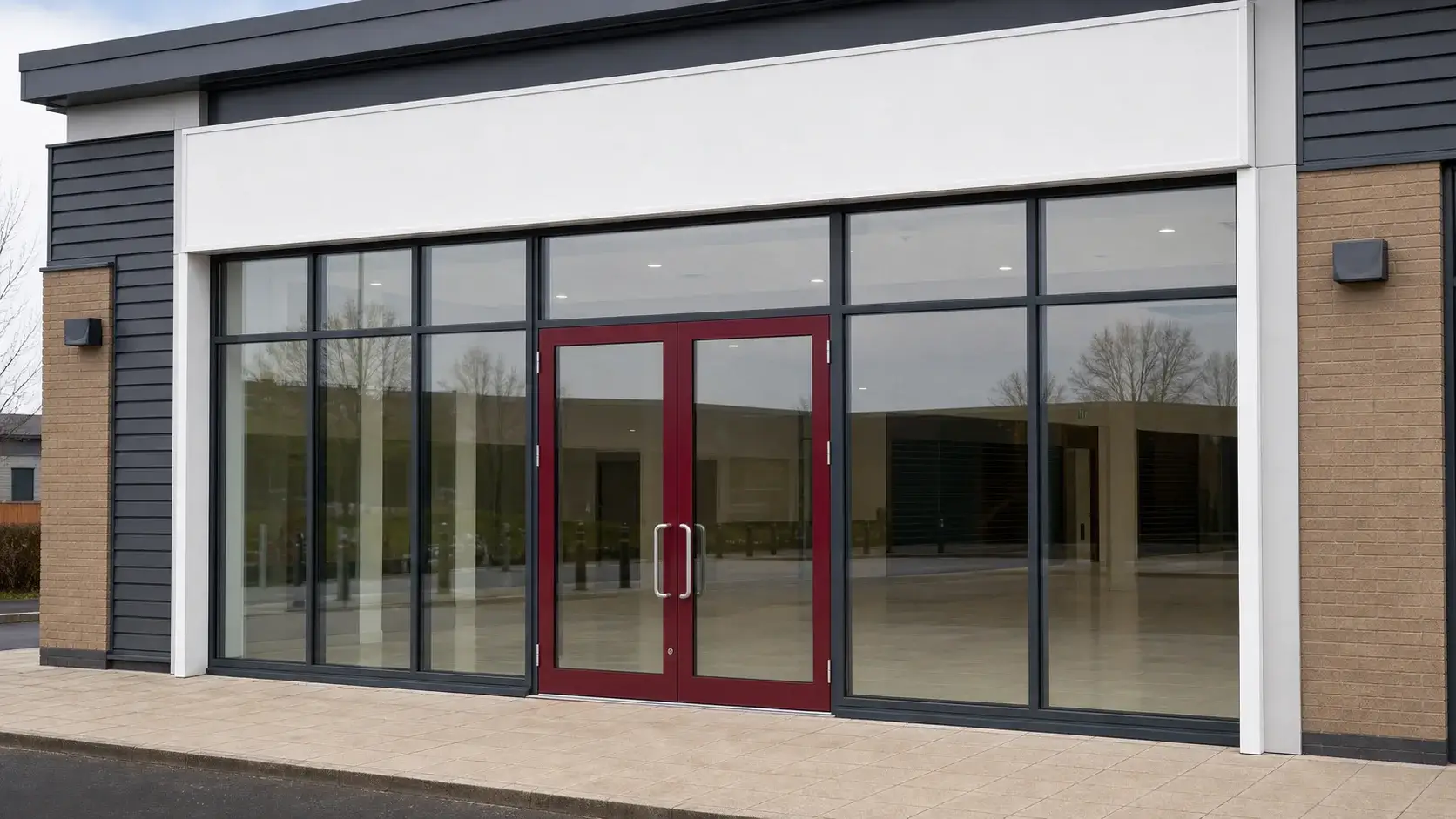
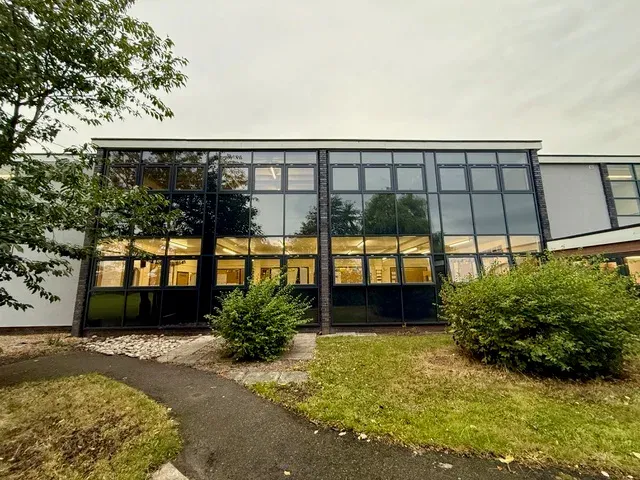
A shopfront isn’t just a door. It’s a frontage — frame, glazed display zones, signage rail, entrance leaves, and the interface back into the unit at the threshold and the head. Get one of those wrong on the order and the whole frontage holds up the fit-out.
This is the specification checklist we wish every shopfitter sent us. A complete enquiry lets us establish the product, identify any gaps and price the frontage without avoidable back-and-forth.
1. The architectural elevation
Start with what the architect or designer has drawn.
- Overall opening — head to ground, full reveal width.
- Sub-divisions — how many bays, how wide each, where the door sits.
- Signage zone — height, vertical position, any lettering depth or service zone for illuminated signage.
- Brand finish — RAL number(s) for the frame. Single-colour or dual (one colour outside, one inside)?
- Glazing zones — what glass goes where (display, transom, signage panel, door leaf)?
If the elevation is signed off, send it to the fabricator as a PDF. Don’t transcribe dimensions from a drawing into an email — too much room for transcription error. We work straight from the elevation.
2. The door — your highest-touch component
Most shopfront door problems trace back to the door spec.
- Single or double leaf? Most retail goes single. Wider hospitality and showroom frontages may want a pair. If a pair, confirm whether the second leaf is fixed or active.
- Hand of the door — opening into or out of the unit, hinge side. From the inside looking out, or from the outside looking in? Specify the convention you’re using.
- Operation — manual (floor spring or pivot) or automatic operator-ready? If automatic, the brand of operator (Dorma, Record, Geze, etc.) will affect the door header detail.
- Hardware schedule — closer type, lock cylinder, panic hardware, finger guard. End-client preference matters here; bank/pharma/school all have different defaults.
- Threshold type — 100mm standard, 150mm raised, or drained? Drained thresholds matter on exposed positions (corner units, beach-front, high-rainfall sites).
- Glazing in the leaf — what build-up? Same as the display zone or different? Toughened? Laminated for security?
For our JD47 shopfront door specifically, the system accepts glazing 6mm to 28mm with a 22mm bead height, and there are four header bar options for manual or automatic operation. Pick the header bar that suits the operator (or lack thereof) before quoting.
3. The display zone
Usually the largest single area in the frontage.
- Glass spec — single, 6mm toughened, 24mm IGU, laminated, low-iron (gallery clarity), solar-control? Each one changes the build-up depth and the bead requirement.
- Vertical mullions — how many, where, what sightline width? Slimmer mullions cost more but transform the visual.
- Transom — is there a horizontal break for the signage zone, or is the display zone full-height to head?
- Bottom rail height — is the glazing dropping to floor or stopping at a kick-plate? Retail bottom rails typically sit between 100mm and 200mm to allow for cleaning and impact protection.
When the display zone is part of a curtain wall extending above (signage zone integrates with curtain walling), the JCW system tie-in handles the interface. When it’s a standalone shopfront, the JD47 tie-in covers it.
4. The signage zone
Often the most neglected part of the spec.
- Height — typically 600mm to 1000mm depending on the elevation. The architect’s drawing usually fixes this.
- Build-up — solid panel (PPC aluminium plate over backer), composite (ACM), or glazed-in graphics? Each is a different fabrication detail.
- Service zone — is there a depth allowance for illuminated lettering, mounting brackets, electrical containment? Specify the back-of-signage clearance.
- Tie-in — does the signage panel sit flush with the glazed zones below, or step in/out? A flush front face is the cleanest finish.
If the signage detail is unclear, send a sketch with the spec. We can fabricate the signage zone as part of the shopfront order so the engineer or installer doesn’t have a separate signage trade to coordinate.
5. The interfaces
This is where shopfronts go wrong on site.
- Head detail — what does the shopfront fix back to? Concrete soffit, steel beam, timber blocking, plasterboard reveal? Will the fixings be exposed or concealed?
- Jamb detail — brick reveal, blockwork, existing aluminium frame on a refit? Is the existing reveal square and plumb, or out of true?
- Threshold / floor finish — is the new shopfront sitting on a screed, a tile, an existing terrazzo? Cut-back required?
- Weatherline — where does the frontage meet the wall? Is there an existing weatherbar or DPC to tie into?
- Internal closure — what’s behind the frontage? A bulkhead, a stud wall, a void to the unit’s grid ceiling?
A good shopfront install is 80% interface detail. We can fabricate the frontage to your survey, but the interfaces are still your engineer or installer’s responsibility on site. The clearer the interface assumption on the order, the lower the chance of a site call asking us to remake a profile.
6. The dispatch and delivery
Last few details before you sign off.
- Site address vs depot address — where do you actually want the order delivered? Some shopfitters take to depot and re-distribute; some go direct to site.
- Delivery date — is your fit programme fixed? Tell the fabricator the date you need on site, not just the date you want it dispatched. We can plan production back from your fit date.
- Lifting and handling — large frontage panels need crane access. If the site is restricted, flag it on order and the order can be sectioned to fit through the access route.
- Labelling — every order should arrive labelled by opening reference. We do this as standard. Confirm your survey reference convention so the labels match your installer’s drawings.
What we typically supply
Our complete aluminium shopfront systems are built on the JD47 (door) + JCW (curtain wall and display zone) Jack Aluminium platform. Display glazing to 28mm, system height to 13m with the curtain wall and RAL finishes to the agreed specification. The frontage is fabricated as one coordinated order and checked against the approved information; swing-door elements are assembled and function-checked on the workshop jig before dispatch. That is fabrication QC, not certification testing. Opening-reference labelling, glazing and beading are supplied where specified on the quotation.
If you have a survey or elevation ready, send it. Allow approximately 21 working days for general planning. The quotation confirms the current lead time, its start point, the exact date and any glass, finish or product-specific exceptions.
Replacement frontages follow the same made-to-order process. The site must be made safe first; we supply the fabricated aluminium for your team or appointed contractor to fit.